
Digital twin and technical documentation: Why technical documentation is becoming part of digital product knowledge
Today, products are increasingly configured to meet individual requirements and are operated, maintained, and further developed over many years. New information is continuously generated in the process—from design, software, and service through technical documentation. The challenge is to make this product knowledge consistently available throughout the entire lifecycle.
The example of a packaging machine manufacturer illustrates just how complex this can be in practice. The manufacturer supplies a food producer with a specially configured machine. Several years later, the machine needs to be expanded to process a new packaging format. At this point, the information provided must precisely match this specific machine: Which components were originally supplied? Which have since been replaced? Which software version is installed? Which safety requirements apply following the modifications made to date? And which documentation applies to this particular machine?
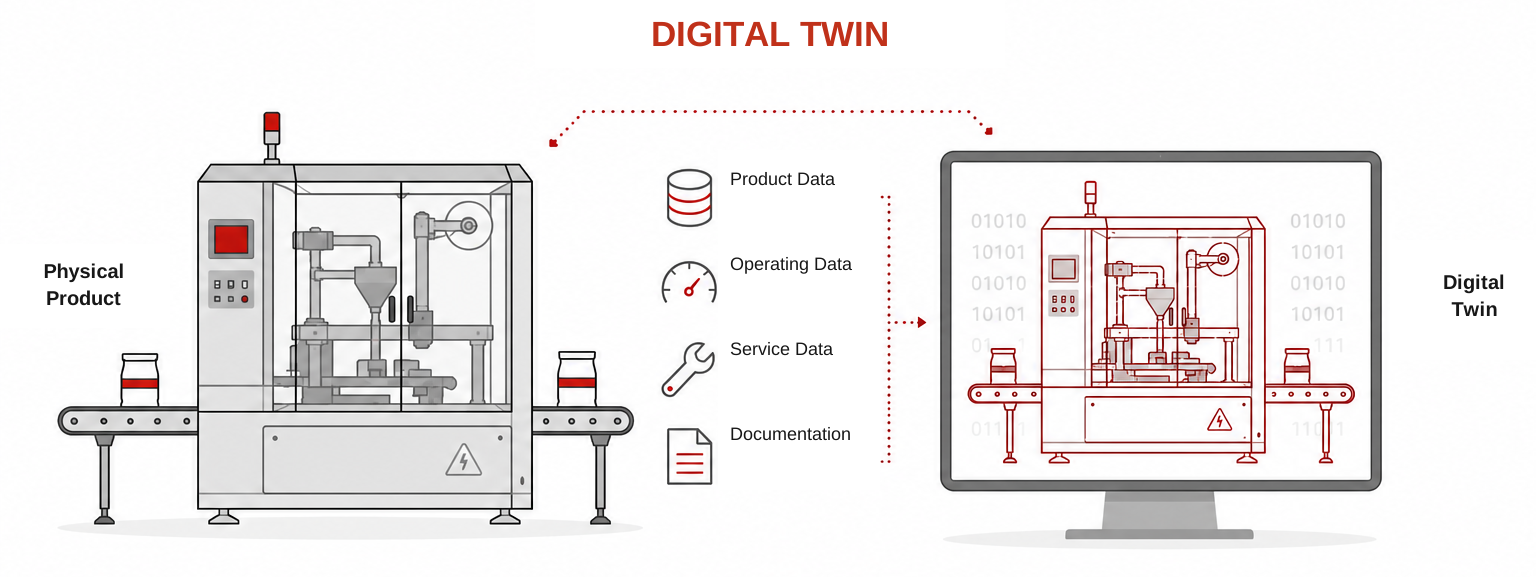
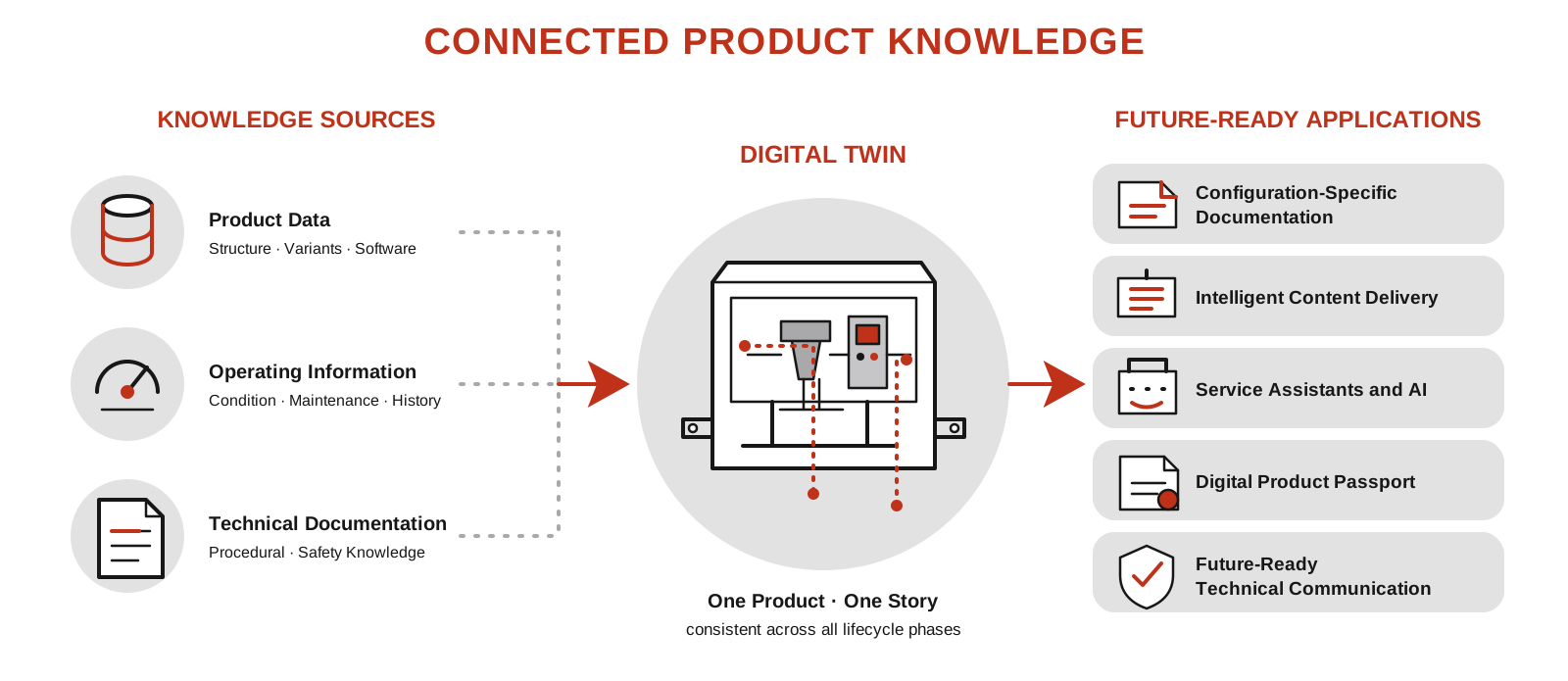
In many companies, this information is distributed across different systems—from design and engineering to PLM and ERP systems and the component content management system (CCMS). Only when these sources are connected does a complete picture of the product emerge. This is precisely where the digital twin comes in: it brings together product data, operational information, and technical documentation to create a shared body of digital product knowledge.
For technical documentation, the digital twin represents a fundamental shift. Documentation is no longer regarded solely as a separate information product, but as part of a comprehensive digital information model. Product data, operational data, service information, and documentation content must work together so that users receive exactly the information that matches their specific product, its configuration, and the context in which it is being used—at precisely the right moment.
Technical documentation thus becomes an important knowledge component of the digital twin: it provides the procedural, safety, and process knowledge that makes product and operational data useful in the first place.
(1) What is a digital twin?
A digital twin brings together many different types of information. First, it describes how a product is structured—for example, through CAD data, bills of materials, or configuration information. It also documents the product’s current condition, for example through software versions, parameter settings, and sensor and operational data. In addition, it includes the information required for operation and service, such as maintenance and spare-parts information, quality and compliance data, and technical documentation content. In many companies, this information is currently stored in different systems: PLM, PIM, and ERP systems, CCMSs, service platforms, or IoT systems.
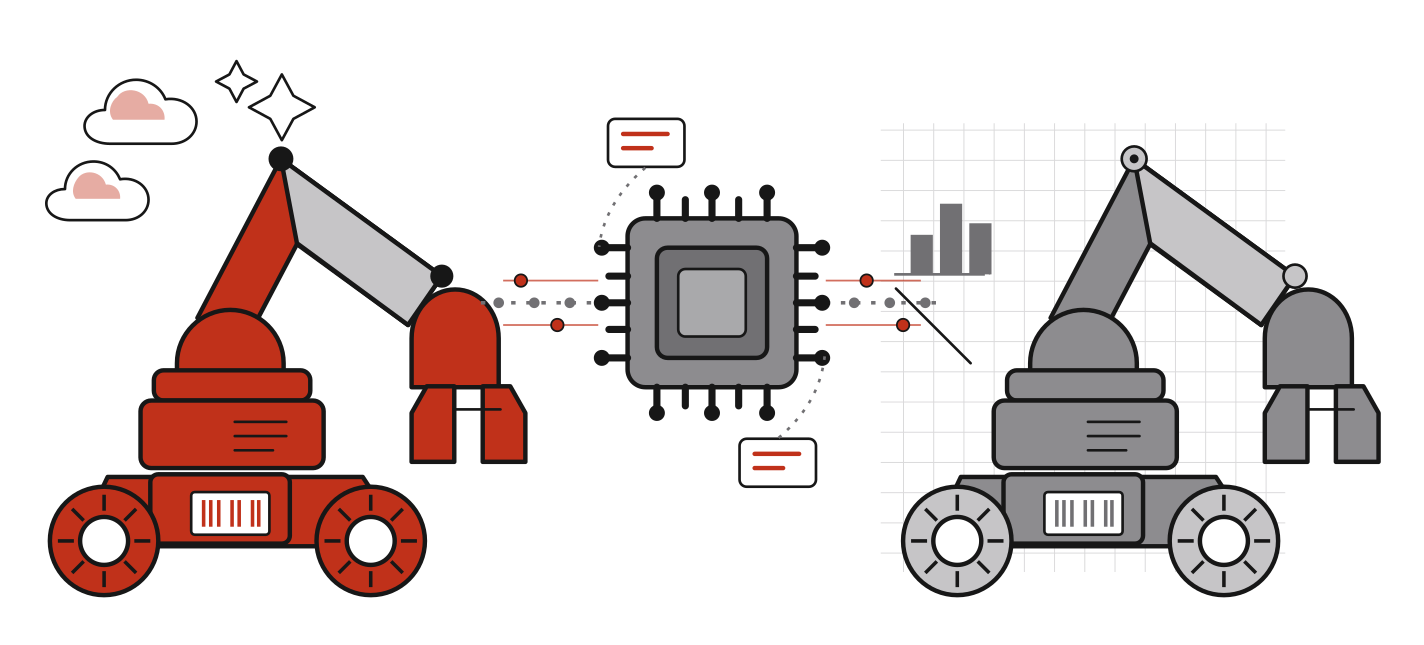
The digital twin brings this information together in a shared digital product model.
The objective is to provide a consistent overall picture of the product—not only as a product type or model range, but increasingly as a specific, individually configured product that has been delivered and is in operation.
1.1 How is technical documentation part of a digital twin?
Technical documentation answers questions that product or operational data alone cannot answer:
- How can a component be removed safely?
- Which maintenance steps are required?
- Which warnings apply in a particular situation?
- Which spare parts are approved for this product configuration?
- Which software version is compatible with which hardware?
- Which inspections are required following a modification?
- Which information is relevant to disposal or recycling?
This information typically comes from technical documentation. In the digital twin, however, it is no longer provided in the form of isolated manuals but as structured information units linked to product data, components, variants, operating conditions, and lifecycle phases.
Technical documentation therefore evolves from a document into a component of a connected information system. It adds clear, task-oriented, and audience-specific product knowledge to the digital twin.
Recommended reading: Driving technical documentation from a digital twin
(2) The digital twin throughout the product lifecycle
The benefits of digital twins are not limited to a single phase. They accompany products throughout their entire lifecycle. Each phase creates different information needs—and therefore different requirements for technical documentation.
2.1 Design and development
The foundation for the digital twin is created during the development phase. Design data, requirements, simulations, product structures, and initial technical information are created and connected.
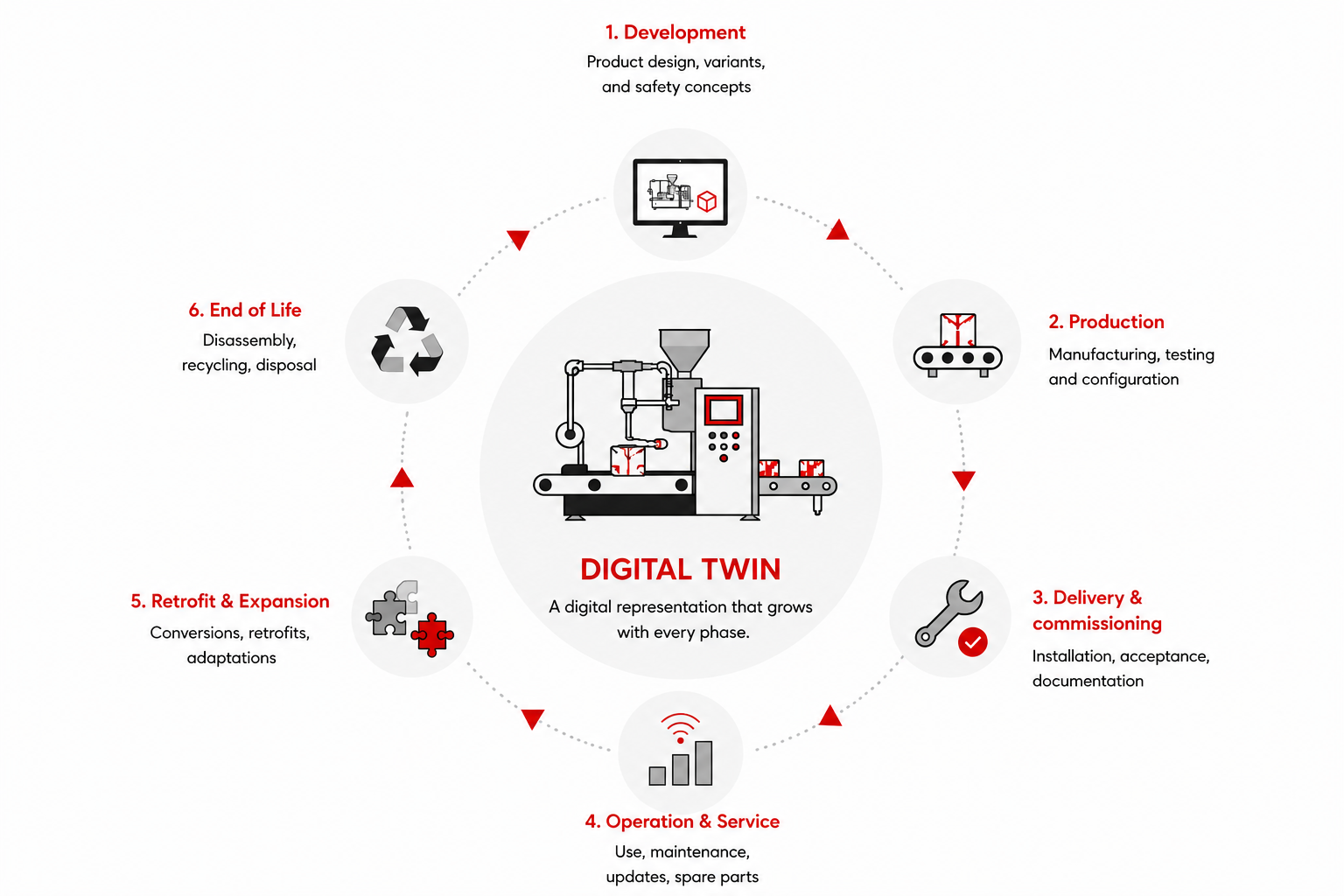
For our packaging machine manufacturer, the digital twin begins long before delivery. During development, the product structure, variants, safety requirements, and initial maintenance concepts for this particular machine are defined. They form the basis for all the information that will accompany the customer throughout the product’s lifecycle.
This phase is particularly important for technical documentation because much of the information that will later be required for operation and service is already created at this stage. This includes safety and risk information as well as requirements arising from standards and directives. At the same time, functional descriptions and technical specifications are developed, and variant and option models are defined. Initial maintenance and service concepts, along with information about materials and components, are also created during this phase.
If technical writing teams are given access to product data and product structures at an early stage, they can prepare content more systematically and connect it to the digital twin more easily later on.
2.2 Production and commissioning
During production and commissioning, the digital twin changes: the planned product becomes a specific product that is actually delivered. Manufacturing, inspection, and configuration information is now added to the design and product data.
Upon delivery, the planned configuration becomes a specific product. Serial numbers are assigned, the equipment actually installed is documented, and installed software versions, parameter settings, inspection data, and calibration data are recorded. Acceptance information and instructions for assembly and commissioning are also added to the digital twin. This completes the transition from the development model to the individual product.
This phase illustrates why configuration-specific documentation is so important. Users do not need the complete documentation for every possible variant; they need exactly the information that applies to the product actually delivered.
The digital twin provides the context. Technical documentation provides the relevant content.
2.3 Operation and maintenance
During the operational phase, the digital twin is continuously enriched with new information. Sensors, control systems, IoT platforms, and service systems provide data about the product’s current condition.
In the example of our packaging machine manufacturer, the digital twin grows with each maintenance activity and service call. Over the following years, the machine changes continuously. Wear parts are replaced, software is updated, and sensors are retrofitted. With every maintenance activity, the digital twin grows and documents the history of this machine.
This information enables new forms of information delivery. Documentation can be provided according to the machine’s condition and the current situation. The customer’s service technician no longer receives the complete documentation for the entire product range, but the maintenance instructions that match the installed machine configuration and the current error message. Digitalization is creating new application scenarios that require relevant information from technical documentation:
- condition-based maintenance
- predictive maintenance
- digital service assistants
- self-service portals
- field service apps
- augmented reality applications
- AI-assisted troubleshooting
For this to work, documentation content must be structured and modular and must be capable of being linked to the relevant product and condition data.
2.4 Modification, modernization, and retrofit
Many technical products, machines, and systems remain in use for years or even decades. During this period, they are expanded, modernized, modified, or adapted to meet new requirements.
Returning to our example: after several years, the food producer wants to manufacture a new packaging format. The machine must be expanded for this purpose. This is where the real benefit of the digital twin becomes apparent: all previous changes can be traced, allowing the exact documentation applicable to this machine configuration to be provided. The digital twin supports this phase by making changes traceable:
- Which components have been replaced?
- Which software version is installed?
- Which safety-related changes have been made?
- Which documentation content applies after the modification?
- Which inspections or certificates are required?
For technical documentation, this means that content must be version-controlled, auditable over time, and assigned a clearly defined scope of validity. It must remain possible to determine which information applies to which product configuration at any given time.
This is particularly important for long-lasting capital goods, machines, systems, and complex technical products.
2.5 Disposal, recycling, and the circular economy
The digital twin is also becoming increasingly relevant at the end of the product lifecycle. Sustainability, the circular economy, and regulatory requirements mean that information on materials, components, and recyclability must be available.
This includes information about material composition and hazardous substances, as well as disassembly and recycling information. It must also be possible to determine which components can be reused, which disposal procedures must be followed, and which regulatory evidence is required for the product. In the context of the Digital Product Passport, this information will continue to gain importance.
Technical documentation can make an important contribution here if it is structured by product and component. It is important to note that the Digital Product Passport complements the digital twin; it does not replace it.
At some point, our packaging machine also reaches the end of its lifecycle. By then, the digital twin contains not only its complete operating and maintenance history but also all the information required for disassembly, recycling, and proper disposal.
Recommended reading: The Digital Product Passport: Requirements, implementation, and scenarios for manufacturers
(3) Requirements for technical documentation in the digital twin
For technical documentation to be used in the digital twin, content must be structured differently from traditional documents and delivered in different ways.
3.1 Structured, semantic, and configuration-specific content
3.1.1 Modular content instead of monolithic manuals
Large, linear manuals are only suitable for digital twins to a limited extent. What is needed are small, self-contained information units that can be combined flexibly and delivered according to context.
Typical modules include:
- safety instructions
- work steps
- component descriptions
- maintenance instructions
- diagnostic steps
- troubleshooting measures
- technical data
- inspection procedures
- spare-parts information
These modules can be reused, filtered, and linked to product data. This capability is essential if documentation is to be provided in the digital twin according to a particular configuration or condition.
3.1.2 Metadata and classification
However, modular content alone is not enough. For a digital twin to find and provide relevant information automatically, content must be described using metadata. Typical metadata includes:
- product variant
- component or assembly
- serial number reference
- software version
- target audience
- task or process
- lifecycle phase
- language
- validity
- safety relevance
- information type
Metadata makes content machine-readable. It provides the basis for automatically connecting documentation to product structures, variant models, or service processes.
In the packaging machine example, this metadata indicates, for instance, the product variant, software version, or target audience to which a maintenance instruction applies.
Metadata models, ontologies, and standards such as iiRDS therefore play an important role in establishing company-specific information models. iiRDS describes information objects and their context, thereby supporting the context-specific delivery of technical documentation.
iiRDS-based technical documentation can be integrated into the digital twin through the Asset Administration Shell (AAS). The corresponding AAS submodel has been published by the Industrial Digital Twin Association (IDTA).
Recommended reading: Ten questions about iiRDS
3.1.3 Semantic linking with product data
A digital twin is based on relationships—between products, components, variants, functions, operating conditions, and information.
For technical documentation, this means that content should not simply be stored; it should be linked unambiguously to its product context.
For the packaging machine’s maintenance instructions, this could mean linking them to:
- a specific component
- a product variant
- a target audience
- a maintenance interval
- a safety context
- possibly a specific error code
- validity for particular software versions
Only these links enable the system to provide exactly the right maintenance instructions for the machine that the food producer is actually operating.
3.1.4 Configuration-specific documentation
Today, many products offer numerous variants, have a modular design, and are software-controlled. Machines, industrial systems, vehicles, medical devices, and software solutions are frequently configured to meet individual requirements.
The digital twin makes it possible to tailor documentation precisely to a specific product. Content is displayed only if it is relevant to the respective configuration. This offers several advantages:
- Users receive less irrelevant information.
- Comprehensibility improves.
- Service processes become more efficient.
- Errors caused by incorrect information are reduced.
- Documentation can be updated more easily throughout the lifecycle.
Configuration-specific documentation is therefore becoming a key use case for digital twins.
3.2 Requirements for delivering technical documentation
The digital twin changes not only the content but also the way in which it is delivered.
3.2.1 From documents to information on demand
Traditionally, documentation has often been provided as a PDF, an online manual, or printed guide. With the digital twin, the focus shifts: information must be available according to the situation, user role, and context. This means:
- not the complete manual, but the relevant information
- not information for every product variant, but information for the specific configuration
- not static, but updatable
- not isolated, but embedded in digital processes
The digital twin provides the context. Technical documentation provides clear, actionable information.
Recommended reading: Content delivery: Technical information where it is needed
Customer reference: Endress+Hauser: Reshaping technical communication toward content delivery
3.2.2 Integration into enterprise systems
For this to work, technical documentation must be integrated into numerous enterprise systems and exchange information with them:
- PLM systems
- PIM systems
- ERP systems
- CCMSs
- service platforms
- IoT platforms
- product configurators
- spare parts catalogs
- field service systems
- content delivery portals
In many companies, product data, documentation content, and service information are still managed separately. For the digital twin, these information silos must be connected gradually.
3.3 Use by AI and digital assistants
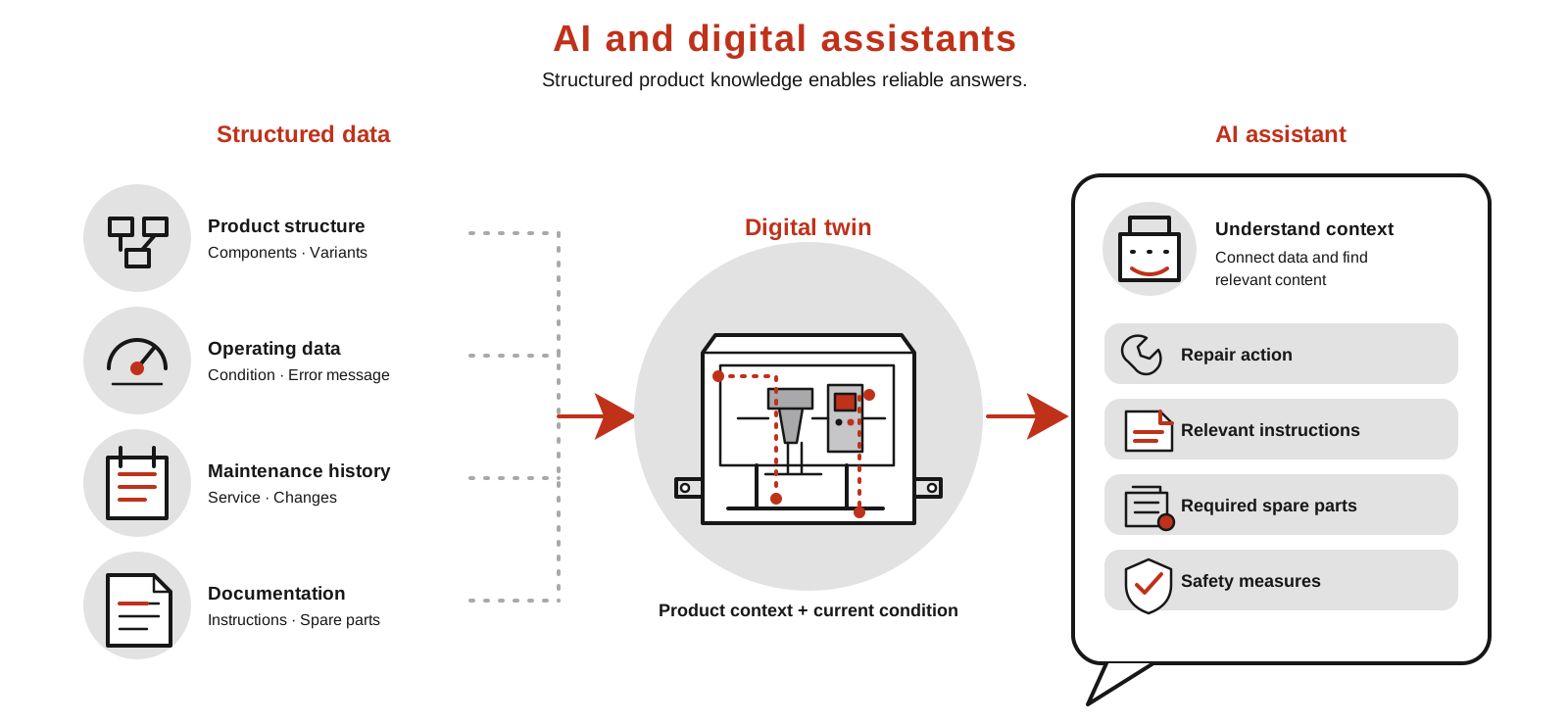
Digital twins also provide an important foundation for AI applications in service, operations, and technical documentation.
AI assistants can combine information from different sources, including:
- product structure
- current error message
- operational data
- maintenance history
- technical documentation
- spare-parts information
This allows them to answer questions such as:
- Which repair measure is required for this error message?
- Which instructions apply to this product configuration?
- Which spare parts are required for the replacement?
- Which safety measures must be observed before carrying out the intervention?
For such applications to work reliably, they require high-quality, structured, and semantically tagged content.
(4) The changing role of technical writing teams
The changes described above affect not only content and systems. They also fundamentally change the role of technical writing teams: these teams are increasingly evolving from documentation creators into designers of product-related information architectures. Editorial work, data modeling, and content engineering are becoming more closely interconnected. Key tasks will include:
- defining information models
- developing metadata concepts
- modularizing content
- connecting product data and documentation
- mapping variant and validity logic
- providing content for digital platforms
- designing interfaces to PLM, PIM, service, and IoT systems
- creating the conditions required for AI-assisted information use
Technical writing teams are thus becoming key players in product knowledge management.
Recommended reading: Information architect for technical communication – an increasingly important job profile
(5) Prerequisites for digital product documentation in the digital twin
For documentation to be used effectively within the digital twin, companies should establish several important foundations.
Structured content. Content must be modular, consistent, and reusable. Only then can it be combined flexibly with product data.
High-quality metadata. Metadata is essential for context-specific delivery, automation, and intelligent search.
A shared knowledge model. Product data, documentation content, and service information must be brought together in an overarching knowledge model.
System integration. CCMSs must not remain isolated. They must be connected to PLM and PIM systems, service platforms, and other enterprise systems.
A scalable information architecture. The more complex products and variants become, the more important a robust product information architecture becomes.
Governance and quality assurance. If content is delivered automatically or used by AI systems, its currency, validity, and quality must be clearly assured.
(6) Why the digital twin is a key topic for the future of technical documentation
Many companies initially view digital twins from an engineering, production, or IoT perspective. However, the topic is equally important for technical documentation.
Wherever digital twins are used, there is a need for clear, up-to-date, and context-specific information—from development and operation through disposal. Technical documentation content is needed in the Digital Product Passport just as much as it is in AI-assisted systems.
Technical documentation is therefore not merely supplementary content within the digital twin. It is an essential component of digital product knowledge.
(7) Conclusion
The digital twin is much more than a 3D model or a collection of technical product data. It is a digital information model that accompanies a product throughout its entire lifecycle.
For technical documentation, this represents a fundamental shift: content must be modular, structured, machine-readable, context-specific, and usable across systems. Documentation becomes part of a connected body of product knowledge that works together with product data, operational data, and service processes.
Technical writing teams that invest in structured content, metadata, information models, and system integration today are laying the foundation for future-ready applications: configuration-specific documentation, intelligent content delivery, digital service assistants, AI applications, and Digital Product Passports.
The digital twin is thus becoming an important driver in the continued development of technical communication—and an opportunity for technical writing teams to strategically reposition their role within the company.
Over the years, what was originally a planned packaging machine has evolved into an individual product with its own history. Development, delivery, maintenance, software updates, expansions, and ultimately the end of the product’s lifecycle have all been documented and made traceable in the digital twin. This is precisely where the benefit of the digital twin lies: it connects product data, operational information, and technical documentation to create a shared body of digital product knowledge.
FAQ – Frequently Asked Questions
What common mistakes do companies make when creating a digital twin?
Many companies initially focus on selecting new software or connecting systems. However, the real key to success lies in the information itself. If product data, technical documentation, and service information are structured inconsistently or are not interconnected, the digital twin will not be able to reach its full potential.
Another common mistake is to treat the implementation of a digital twin purely as an IT project. In reality, a digital twin also involves engineering, service, technical documentation, and product management. Shared information models, clearly defined responsibilities, and a consistent information architecture are essential to creating a digital twin that delivers long-term value.
How can companies tell whether they are ready for a digital twin?
A company does not need to meet every requirement before it can start creating a digital twin. However, it may already have a good foundation if product data is managed digitally, technical documentation has a modular structure, or different enterprise systems are able to exchange information.
If these foundations are lacking, it is often advisable to begin by developing a shared information architecture. This provides the basis for gradually bringing together product data, documentation, and service information to create a unified body of digital product knowledge.
Which departments benefit most from a digital twin?
Digital twins are often associated with engineering or production. In practice, however, they benefit many functions across a company. Product development gains access to consistent product information, service teams can retrieve configuration-specific documentation, and sales teams can provide relevant product information more quickly. Quality management, spare-parts management, and technical documentation teams also work from a shared information base.
The more effectively these departments exchange information, the greater the benefits of the digital twin throughout the entire product lifecycle.
Why is a digital twin not a one-off digitalization project?
A digital twin evolves continuously. Every product modification, software update, maintenance activity, or modernization project adds new information. Creating a digital twin therefore does not end when new software is deployed or individual systems are connected.
Instead, the result is a continuously maintained body of digital product knowledge that evolves with the product throughout its entire lifecycle. To support this ongoing development, companies need processes, clearly defined responsibilities, and an information architecture designed to accommodate change over the long term.