

Digital archive: How parson supports the digitization of the ministerial council minutes of the German federal state Rhineland-Palatinate
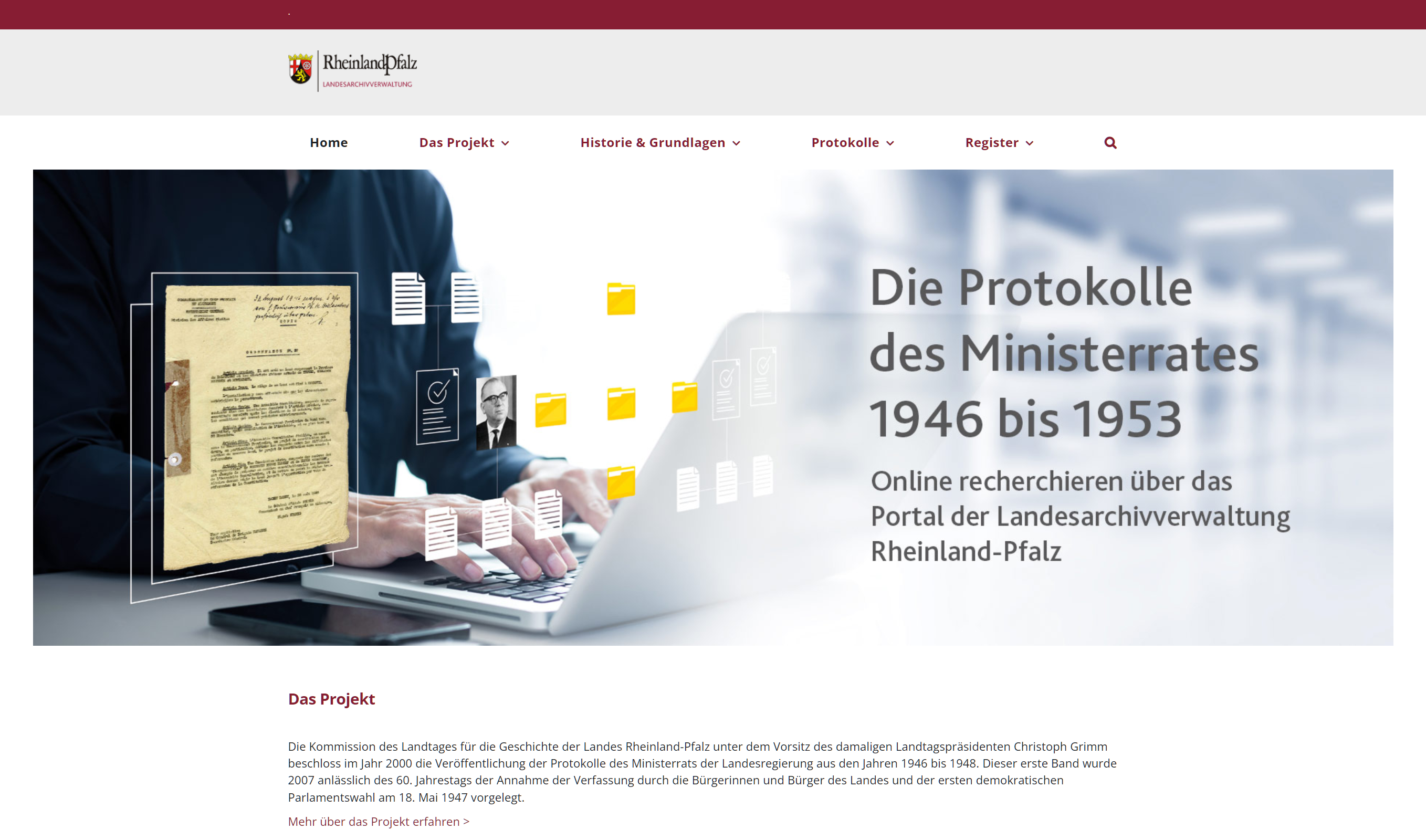
Since 2022, the State Archive Administration of Rhineland-Palatinate, a federal state of Germany, has been digitizing the ministerial council minutes from the post-war period, which until now have only existed in printed form. The goal is a modern online edition featuring indexes, annotations, and advanced search functions. parson supports the digitization effort as a service provider and is developing a suitable XML structure and a tailored Oxygen-based authoring environment for the State Main Archive.
Target audience for this reference: Professionals responsible for digitizing historical records and documents in administration, institutions, and academia.
Would your organization like to digitally process historical collections, archives, or complex document corpora? Our project demonstrates how structured XML markup, modern authoring environments, and automated exports can enable the transition from analog sources to a digital, interconnected edition.
Initial situation and challenges
The post-war ministerial council minutes exist exclusively in printed form. Digitization aims to make these historical documents accessible online in the long term – for both research and the general public – enhanced with indexes, annotations, additional information, and modern search functions. The digital archive edition (1946–1948) is scheduled for publication in February 2026. Additional volumes up to 1953 will follow.
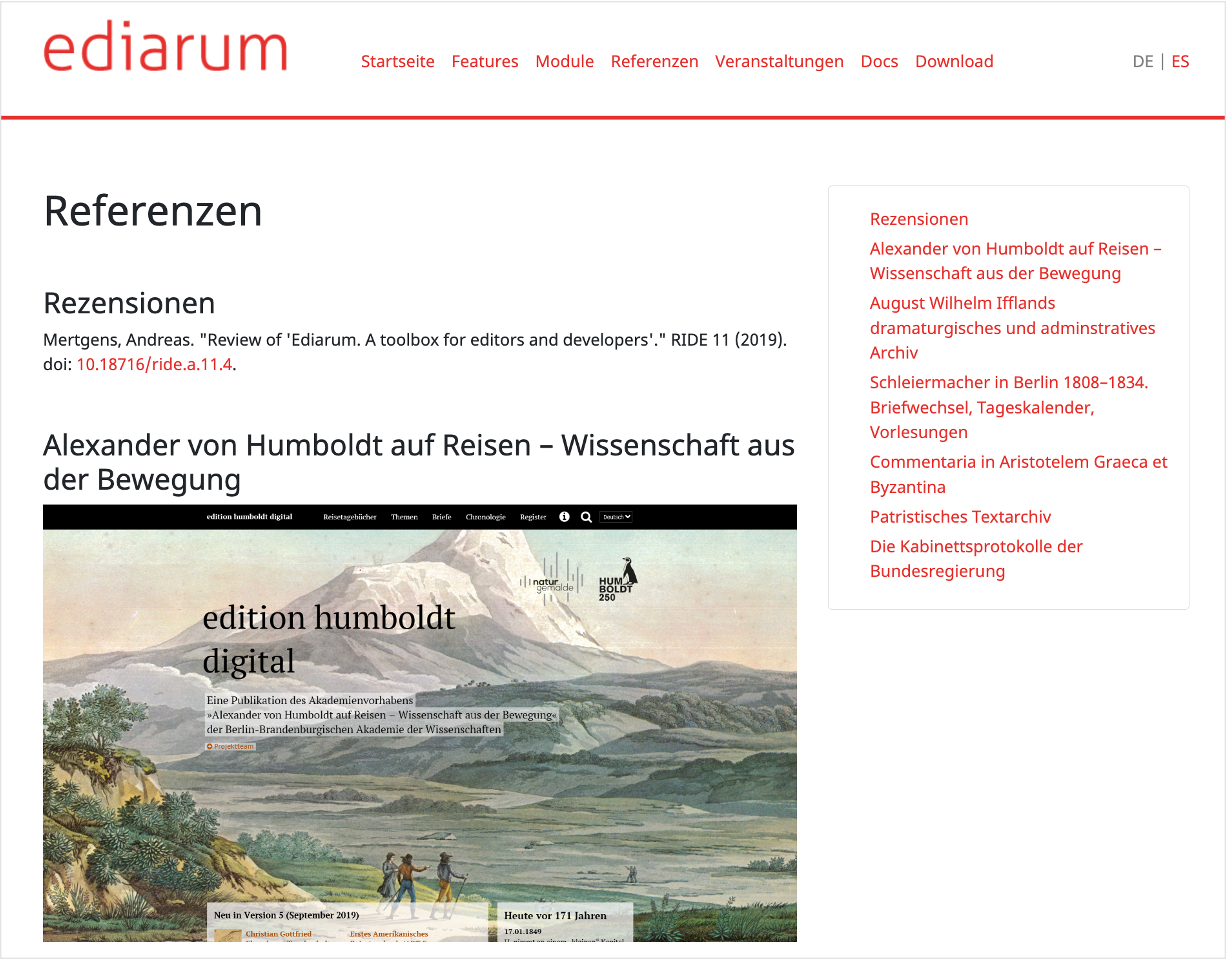
To prepare the historical minutes for digital publication, the State Main Archive uses ediarum, an open-source environment developed specifically for scholarly editions. ediarum supports TEI XML transcriptions, annotations, textual and factual apparatuses, and person and place indexes. Content can be published both online and in print.
The existing ediarum framework has originally been designed for parliamentary or federal protocols. To meet the specific requirements of digitizing the ministerial council minutes of Rhineland-Palatinate, the State Main Archive required the following:
- a suitable XML structure
- an adapted framework for the Oxygen XML Editor
- technical expertise in XML, Oxygen, and the required publication exports
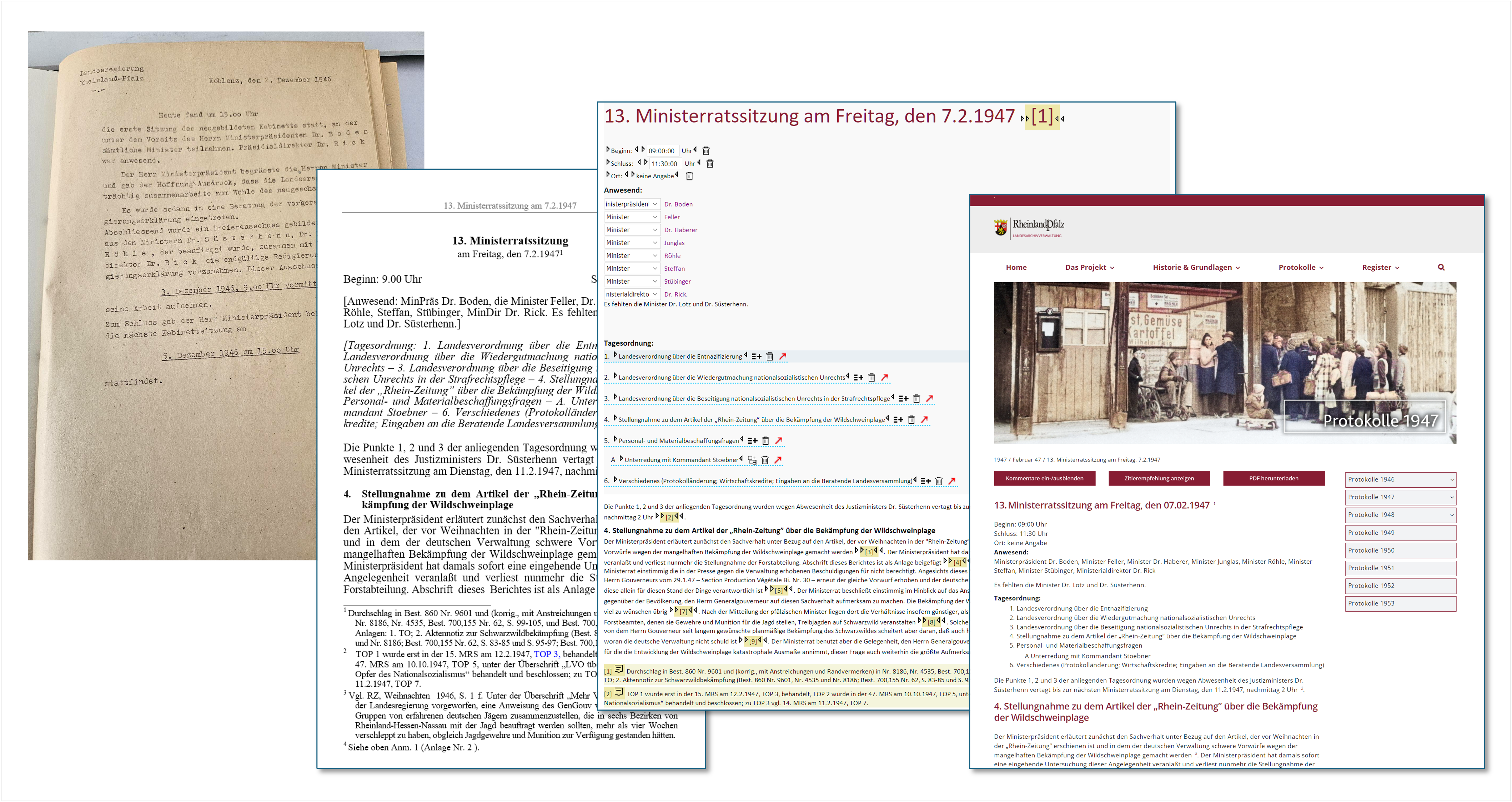
In addition, the previous process chain – from original documents to Word → PDF → website – needed to be transformed into a sustainable, structured XML workflow.
Our services for digitizing complex historical documents: XML structure, Oxygen framework, and training
As a service provider, parson supported the State Main Archive by building a robust, user-friendly authoring environment based on TEI-XML and Oxygen XML Editor.
Services at a glance
- Develop a project-specific XML structure for the ministerial council minutes in TEI-XML
- Adapt the ediarum framework to the structure and requirements of the State Main Archive
- Set up an Oxygen environment to efficiently support manual XML markup
- Implement an HTML export in Oxygen for further processing in WordPress
- Implement web features such as:
- show/hide footnotes
- simplified print views
- citation recommendations
- project-specific CSS
- Consult on sustainable digitalization workflows and content reusability
Knowledge transfer: Training for archive digitization
To ensure the archive team could continue working independently, parson provided targeted training on the following subjects:
- XML and TEI
- Oxygen and ediarum
- Export and publication processes
Collaboration
parson carried out the project in close collaboration with Oliver Rummel, CityLab Hamburg (project management, concept development, implementation, UX, WordPress configuration) and Alexander Beitz, dreistmedia (concept development and graphic design).
Result: A digital edition environment for archives
The State Archive Administration of Rhineland-Palatinate now has a modern digital edition environment for the long-term digitization of its archival holdings. The historical minutes are gradually being marked up in TEI-compliant XML, enriched with indexes and scholarly apparatus, and will be published online.
This allows a significant part of the region’s history to become digitally searchable, interconnected, and user-friendly for researchers and the public, for the first time.
Working with parson was consistently professional, constructive, and solution-oriented. Thanks to their expertise, we can prepare our ministerial council minutes in a sustainable digital form for the first time and make them accessible to researchers and the public.” (Quote translated from German)