
Technical information where it is needed: Content delivery in technical communication
The way content is delivered is fundamentally transforming technical documentation. Instead of static PDFs, users and AI agents receive modular, context-specific information tailored to their role, situation, and product variant. Companies benefit from numerous advantages:
- Faster troubleshooting
- Reduced support effort
- Improved self-service
- Up-to-date, consistent content across all variants and languages
- Intelligent information linked to product data and service processes
- A future-proof information architecture as the foundation for digital business models
- A reliable foundation of data and information for AI agents
Content delivery portals, knowledge portals, and self-service portals are becoming the central access point for technical knowledge, both internally and for end customers.
Technical information where it's needed
It’s the early morning on the production floor. The machines are running, their humming and hissing mingling with the typical industrial noise. Service technician Isabel is performing maintenance on machine A342 when an error message appears on the control panel: Error code 203.
In the past, Isabel would have either consulted a manual full of troubleshooting descriptions or asked her colleagues for help. If the machine configuration differed from the example in the manual, uncertainty would set in: Which variant is this? Which information applies?

Today, Isabel opens the service portal on her tablet and enters the error code. The portal identifies the product variant via the serial number and displays only the relevant troubleshooting steps. Ten minutes later, the system is up and running again – no waiting, searching, or calling the hotline necessary.
Why content delivery?
Modern products are becoming increasingly complex and configurable, as well as digital. At the same time, users expect information to be fast, precise and context-specific.
Content delivery meets these expectations by providing modular, context-dependent content that is always up to date – via a content delivery portal, a self-service portal, or embedded directly into applications for service technicians.

Rather than searching through documents, users receive the exact information they need in their specific context, depending on their role, product variant, and task.
What does a content delivery portal do?
A content delivery portal, also known as a self-service or customer portal, is an intelligent information system that offers functions such as:
- Semantic, fault-tolerant search. Users can find content using terms, problem descriptions, or system conditions
- Dynamic filters by product, assembly, role, or use case
- Context-sensitive delivery of information (e.g. depending on serial number or user role)
- Automatic updates. Changes in source systems, such as the CCMS, are visible immediately
- Multilingual support
- Interfaces to CCMS, PLM, ERP, service tools and other systems
- Interfaces for consuming systems and AI agents, such as MCP
- Knowledge base functionality that supports internal teams and reduces support effort
Five steps to delivering content through a content delivery portal
(1) Modularize and structure content
For content delivery to work, structured, modular content with a clear metadata model is required. The process usually involves the following five steps:
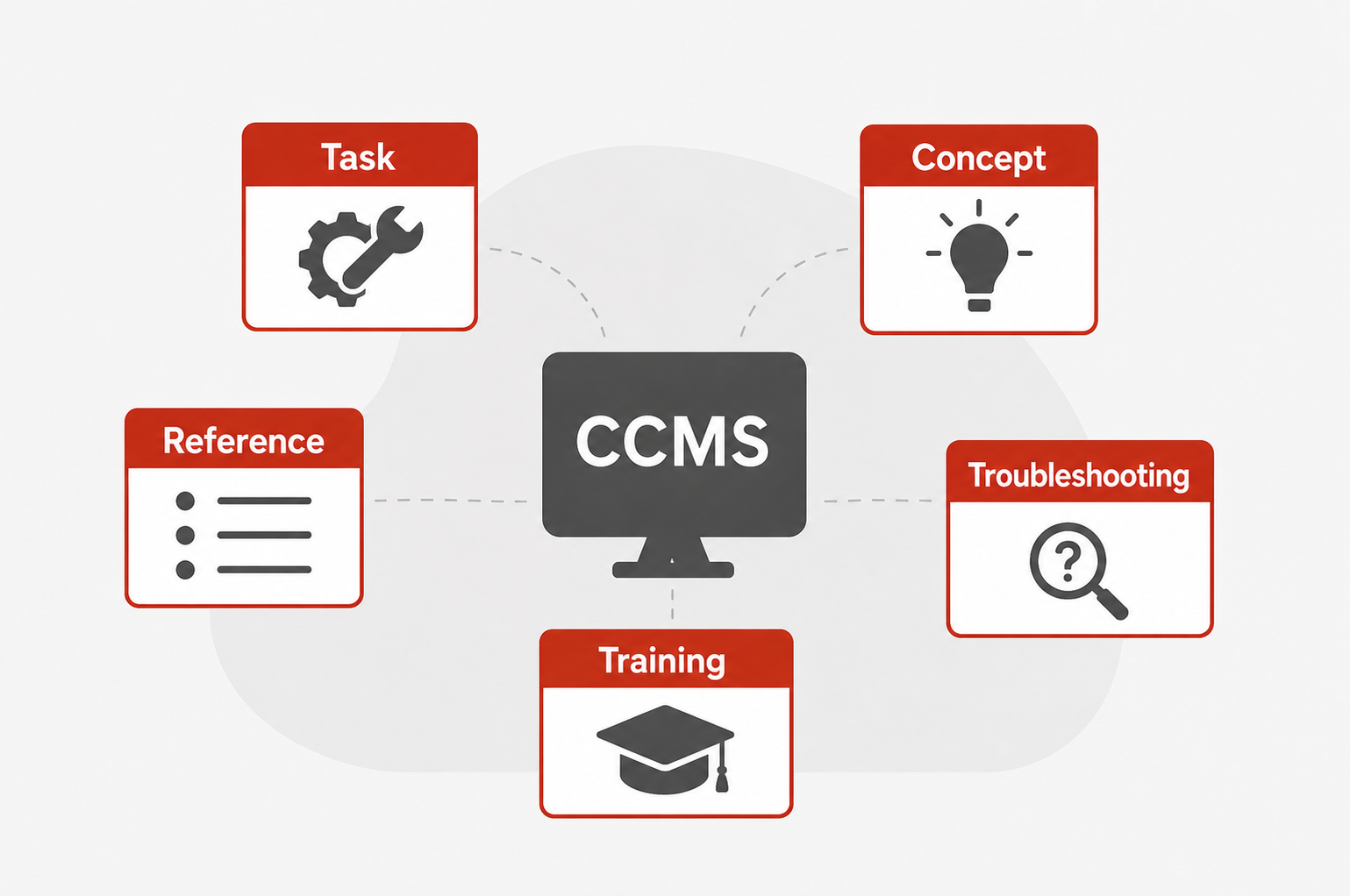
Rather than creating large documents, authoring tools and component content management systems (CCMS) generate small, independent units of information (topics), each of which has a specific purpose, such as providing instructions for a task, explaining a concept, offering a reference, providing troubleshooting information or delivering training. The portal then delivers the most appropriate topics based on the user's situation.
(2) Enrich content with metadata
Metadata enables content to be searched, filtered and viewed in context. Typical metadata includes:
- Product or product variant
- Target group/role (e.g. user, service technician, administrator)
- Usage situation (e.g. installation, operation, troubleshooting, maintenance)
- Confidentiality
iiRDS provides a standardized metadata model for high interoperability and content reuse.

For Isabel, this means that the content delivery portal automatically takes her role as a service technician and the machine’s serial number into account, filtering out irrelevant information.
(3) Defined content sources
Content delivered through a content delivery system can originate from various authoring systems, including: CCMS platforms, knowledge bases, docs-as-code environments and many more. Shared metadata and cross-departmental content models are essential for bringing this content together within the portal.
parson supports you in selecting and implementing a CCMS. Contact us!
(4) Automatic publication to the content delivery portal
Content from authoring systems can be published via APIs, iiRDS packages or workflows. Changes in the source systems are visible automatically.
(5) Context-based display in the content delivery portal and access by AI agents
Based on metadata, the content delivery portal only displays what is needed:
- Service technicians see maintenance procedures and diagnostics
- End customers receive user-oriented information
- Users working with a specific product serial number see variant-specific content
Through standardized interfaces, the portal’s content can be accessed and reused by other applications, such as AI agents and business intelligence solutions.
This creates real self-service value by reducing the need for searching, questions and support.
How to choose the right content delivery portal
Before selecting a solution, clarify the following questions:
- Who uses the information, and which user groups need which information?
- Which tasks and scenarios should be supported?
- Which systems provide content?
- How many variants, revisions, and languages do you need to manage?
Basic principle: First define the information model and use cases – then select the software.
How to successfully implement a content delivery portal
A content delivery or customer portal only adds value if it is based on clear organizational and content strategies. Success depends more on concept, planning and collaboration than on the software itself.
(1) Stable information architecture
A well-designed information architecture defines how content is structured, linked and described using metadata. Only clear information logic enables context-sensitive delivery.
(2) Understanding users
An early analysis of users and their workflows is equally important. Personas, interviews and process observations reveal the information truly needed in specific situations, forming the basis of a user-centered portal.
Further reading: Why companies benefit from analyzing their content and processes
(3) Consistent metadata model
A consistent metadata model, for example, one based on iiRDS, ensures reusability and links content with product data and systems.
(4) Clear editorial processes
Clear editorial processes and content governance rules are needed in order to define responsibilities, approvals and quality standards.
(5) Step-by-step implementation
Rather than a large-scale rollout, we recommend a phased approach involving pilot projects. This allows structures and workflows to be tested on a smaller scale before being implemented more widely.
(6) Broad stakeholder involvement
Success ultimately hinges on the involvement of all relevant departments, including technical documentation, service, IT, marketing and product management. Only when all perspectives are considered can the content delivery portal effectively connect and provide knowledge.
We support you in selecting and implementing a content delivery portal or self-service application.
Future trends in content delivery
Content delivery portals are evolving into smart content platforms that extend beyond documentation to become integral to digital business models, service strategies and product lifecycles.
(1) The digital twin as the entry point
In the future, access to technical information may start directly from the digital representation of a specific product. Based on the serial number, operating status and configuration, the digital twin contains the information required to identify relevant content and can automatically provide maintenance and diagnostic information in the correct context.
Documentation, spare parts, sensor values, and service history merge into a single view.
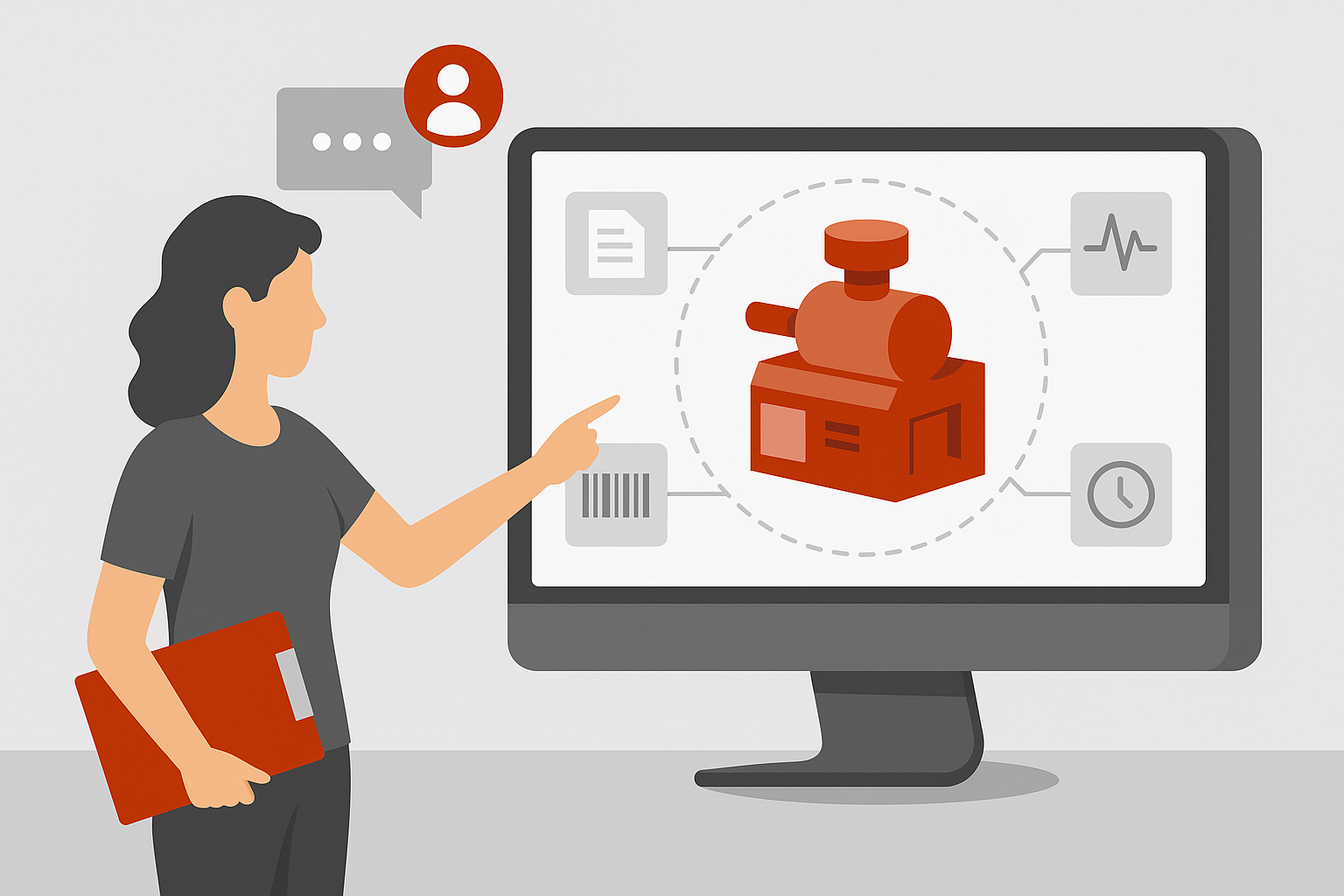
The content delivery portal becomes the central interface through which this product-related information space is accessed. It can even proactively inform Isabel before she asks a question.
Further reading: When the digital twin controls technical documentation
(2) Automated content delivery from product models
As product variants continue to grow, manually maintaining consistent content becomes increasingly difficult. Product models, ontologies, and knowledge graphs link product structure, functionality, terminology, and content.
On this basis, content can be assembled based on rules, for example, safety procedures, inspections, or variant-specific service instructions. This improves efficiency, consistency, and content freshness.
(3) AI-powered search and chat-based communication
The focus is shifting from “finding documents” to “getting answers.” AI systems can understand natural-language questions and provide relevant, context-specific content, not just search results.
Combined with metadata such as iiRDS, this creates precise and traceable answer logic.
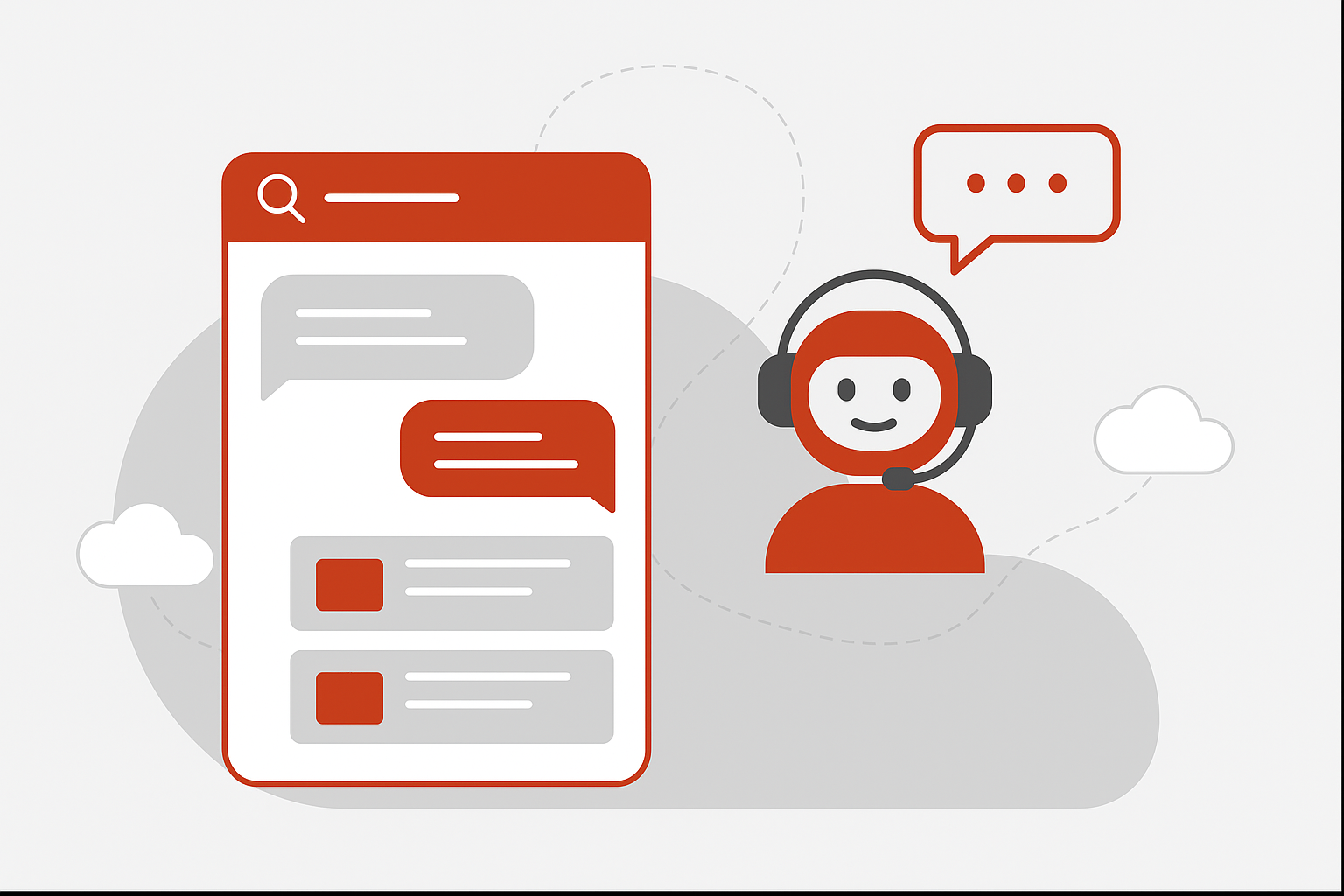
Important: AI uses and enhances the quality of structured content. It does not replace technical communicators.
Learn more about AI for technical documentation
(4) Augmented and virtual reality (AR/VR) directly at the machine
Visual support is becoming increasingly important: Step-by-step instructions can be displayed directly on components, and training can take place virtually. For AR/VR to work effectively, content must be modular and precisely structured, exactly the structure required for content delivery.
(5) Self-service as the standard
Due to skills shortages and growing system complexity, easily accessible knowledge is becoming essential. A well-designed content delivery portal, self-service portal, or embedded knowledge system enables users to solve problems independently – without hotlines or waiting times. This reduces support costs and lowers error rates. Self-service therefore offers measurable economic benefits.
Further reading: Helping people help themselves – from manual to self-service portal
Conclusion
The future of technical documentation lies in delivering structured content that:
- Appears in context
- Is intelligently accessible
- Is connected with product data
- Integrates into digital service processes
Content delivery portals provide the platform for this. They are not just documentation tools. They are central components of digital service experiences.
In the end, Isabel benefits too: She can find the right information within seconds, act safely and get the machine running again before the first support call is necessary. This is the true purpose of content delivery: providing knowledge exactly where and when it is needed.
A content delivery portal, also known as a customer or self-service portal, is a platform that provides technical information in modular, context-specific units rather than in large, static documents (e.g. PDF manuals).
Users can find exactly the content they need for their current situation, tailored to a specific device type, software version, or workflow step. A content delivery portal makes information available online in a searchable and filterable format that is independent of the device used. This transforms documentation into an active information service.
Further services from parson
- Self-service applications and knowledge portals
- 360-degree analysis
- System selection
- Develop information architecture
- Intelligent information with iiRDS
- Metadata models for smart technical documentation
- Product modeling
- Knowledge graphs for product models
- AI for technical documentation
- Smart technical documentation in the digital twin
- Chatbots in customer service
- Publishing pipelines
Knowledge
- Helping people help themselves: from manual to self-service portal
- Why companies benefit from a 360-degree analysis of their content and processes
- Technical documentation: creation, application, quality
- Driving technical documentation from a digital twin
- Digital Product Passport – What manufacturers need to know and prepare now
- Choosing a Component Content Management System (CCMS). How to decide
FAQ – Frequently Asked Questions
Do you need a component content management system (CCMS) for content delivery?
While not strictly required, a CCMS can be useful for content delivery. However, CCMS platforms and other structured authoring solutions offer key features that greatly facilitate content delivery.
- Modularization: Content is maintained as reusable building blocks instead of large documents.
- Reuse: Shared content only needs to be maintained once.
- Metadata management and classification: Content is enriched with metadata for variant management and discoverability.
- Translation management: Translations remain consistent and traceable.
- Versioning and variant management: Different product versions can be effectively managed.
- Interfaces to leading systems: Product data and classifications can be integrated from ERP, PIM, PLM, and other systems.
Without structured authoring solutions, the effort required for maintenance and coordination increases significantly with every new product variant or market. Structured content enables efficient, scalable, and consistent content delivery.
Does content need to be recreated before being transferred into a content delivery portal?
No. Existing documentation can be modularized step by step. This process is called content refactoring.
Companies often begin with content that is especially suitable for modularization, such as safety instructions, maintenance procedures, or standard workflows. This content is transformed into smaller, reusable topics (topic-oriented writing). Additional content is then migrated gradually until a fully modular content repository has been established.
In line with the principle “Start small, scale smart,” the structure evolves continuously during ongoing operations.
Another option is to process legacy documentation – traditional, unstructured documents – directly within the content delivery portal. Many content delivery solutions offer AI-supported functions for breaking content into modules and assigning metadata later. This allows legacy documents to be made accessible and usable quickly.
How long does it take to implement a content delivery portal?
Implementation time depends heavily on the condition and structure of the existing content. Typically, companies start with a pilot phase lasting three to six months, during which a selected product or product family is integrated into the portal. This is followed by a gradual rollout to additional product lines, markets, or target groups.
One important point: The technology can usually be implemented more quickly than the content can be prepared. The main effort lies in preparing the content, especially modularization and metadata enrichment.
How is content kept up to date in a content delivery portal?
The content delivery portal is connected directly to the CCMS or another content source. Changes are published automatically or via defined publishing workflows. Manual updates are no longer necessary, ensuring that content always remains up to date.
APIs and standardized exchange formats such as iiRDS packages are often used to guarantee interoperability and content freshness.
What if users cannot find anything in the content delivery portal despite using the search?
When selecting a content delivery solution, search and navigation should play a central role. The use of metadata within the portal is equally important to help users find relevant and related information.
In addition, testing with real users helps validate search logic and terminology. This ensures that the portal aligns with the language and expectations of its users.
Can a content delivery portal also be used internally, for example, in service, manufacturing, or training environments?
Yes, and many companies start exactly there, for example in service, production, or training environments. This helps reduce support effort, onboarding times, and knowledge loss caused by employee turnover.
At a later stage, the content delivery portal can be expanded into a customer-facing self-service offering using the same technological foundation, combined with adapted access rights and content.
How is sensitive or safety-critical information handled in a content delivery portal?
Content delivery portals, customer portals, and self-service portals support role-based access control. This allows information to be released specifically for different user groups, such as:
- Users: role-appropriate information
- Service technicians or partners: advanced service and diagnostic data
- Internal teams: system knowledge, configuration, or diagnostic information
Security is ensured through clearly defined roles, permissions, and approval processes. This allows organizations to share knowledge effectively without exposing sensitive information.
How can a content delivery portal be integrated into existing systems?
A content delivery portal can be connected to other enterprise systems via interfaces. For the portal itself, integration with authoring systems or the CCMS is especially important for automatically delivering content. Even more important, however, are integrations with ERP, PIM, or PLM systems on the authoring or CCMS side, where product and context data are incorporated into content creation and maintenance. This enables information to be exchanged across systems and displayed in the appropriate context, for example, for a specific product, serial number, or operating condition.
Equally important are the interfaces for downstream systems that consume information provided by the content delivery portal. These may include AI agents that require product information for a variety of tasks, as well as business intelligence solutions used to analyze feedback and usage data.
As a result, the content delivery portal becomes the central access point for technical knowledge, connecting documentation, product data, and service processes into a consistent information environment.