
Why retrospectives are essential in projects: A service provider’s perspective
Today’s project landscape is shaped by time and budget constraints. This makes systematically optimizing processes and methods all the more important. One valuable technique in this regard is the retrospective.
For a service provider like parson, which collaborates closely with its customers, regular retrospectives are essential. Retrospectives create space for open dialogue and enable both parties to learn from experience.
At parson, retrospectives are an integral part of all projects. We have established corresponding process definitions, work instructions, and templates in accordance with ISO 9001.
In this article, we explain how retrospectives improve project work sustainably, how they are conducted, and the added value they offer all stakeholders.
The meaning and objective of the retrospective
A retrospective is a structured session in which the project team and the customer analyze an ongoing or recently completed project. The goal is to identify the project's strengths and weaknesses and derive measures for the remainder of the current project or future projects.

Retrospectives are intended to create a safe space in which the primary focus is on discussing the "how" of collaboration. All participants should feel free to express both praise and criticism on equal footing.
Creating transparency
Transparency is one of the cornerstones of successful collaboration. During the retrospective, we openly and honestly discuss the project with our clients. This fosters mutual understanding and trust.
Customers gain insight into our work as service providers, and we develop a deeper understanding of their expectations and needs. We discussed these expectations, goals, and approaches during the kick-off. See also: How parson manages projects
Identifying successes and areas for improvement
During the retrospective, we review the positive aspects of a project as well as the areas that need improvement. This enables us to celebrate successes while engaging in constructive criticism.
This dual perspective ensures that strengths are repeated and weaknesses are avoided in the future.
Improving collaboration and strengthening motivation
A retrospective fosters a collaborative environment where both parties work together to develop solutions. This strengthens the relationship and promotes a culture of collaboration and continuous learning.
Additionally, all team members have the opportunity to contribute their opinions and suggestions. This increases motivation because their input is clearly considered.
Ensuring quality
The most important function of a retrospective is to learn from past experiences and apply those lessons to future projects. By doing so, we can adapt our processes and workflows to become more efficient, effective, and sustainable. These improvements lead to better results and higher client satisfaction.
How to conduct a successful retrospective
1. Preparation
We define the objectives of the retrospective in advance and collect relevant data, such as:
- Project requirements and objectives
- Plans, timelines, and budget
- Project results and reports
- Feedback from team members and clients
- Technologies and methods used
Internal team preparation
Before the joint retrospective, the parson project team reflects internally on questions such as:
- Were the project objectives achieved?
- Were the strategic objectives considered?
- Were the operational objectives implemented?
2. A retrospective with a clear structure
Having a clear agenda ensures that all relevant topics are addressed, for example:
- Introduction: Clarify the objective and process of the retrospective
- Project objectives and requirements: Review the kick-off agreements
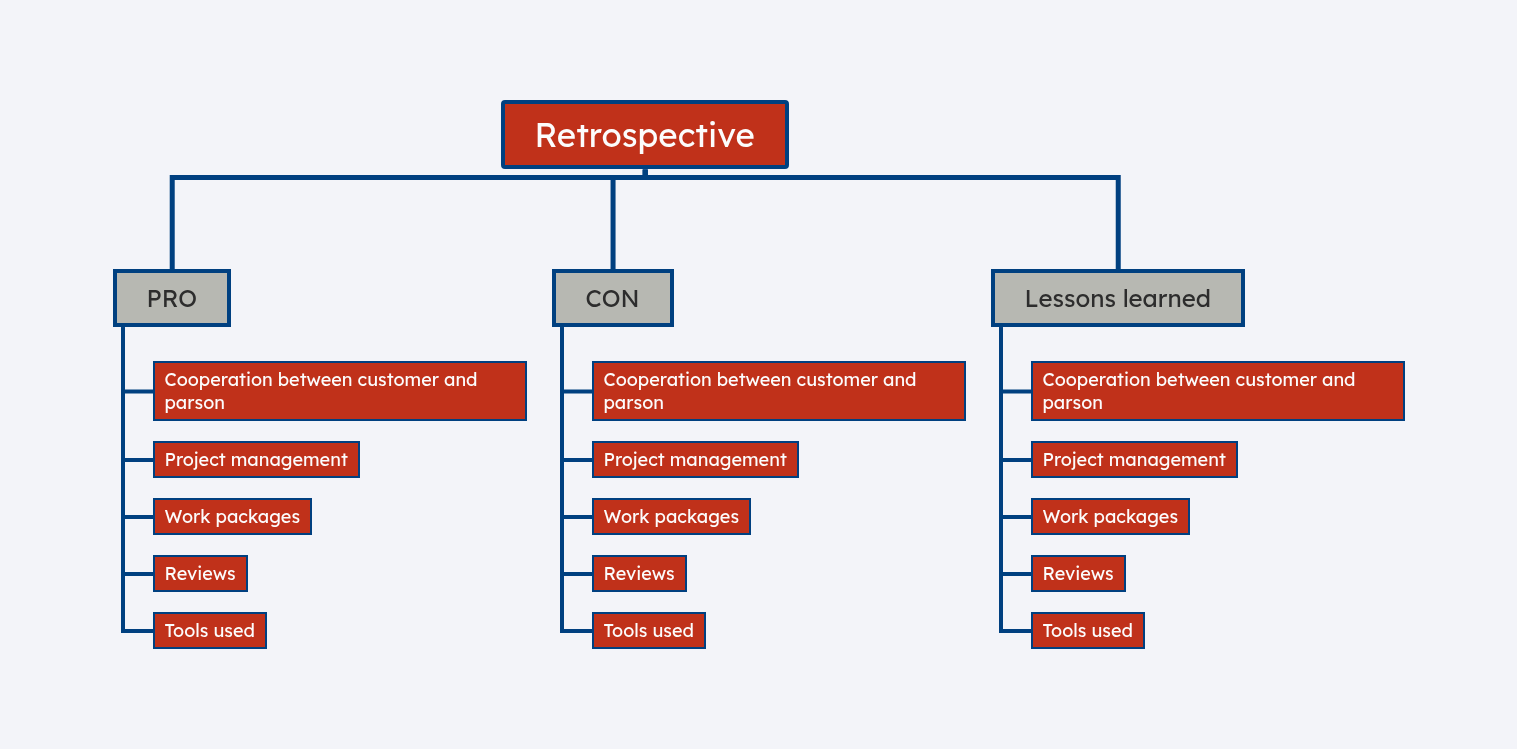
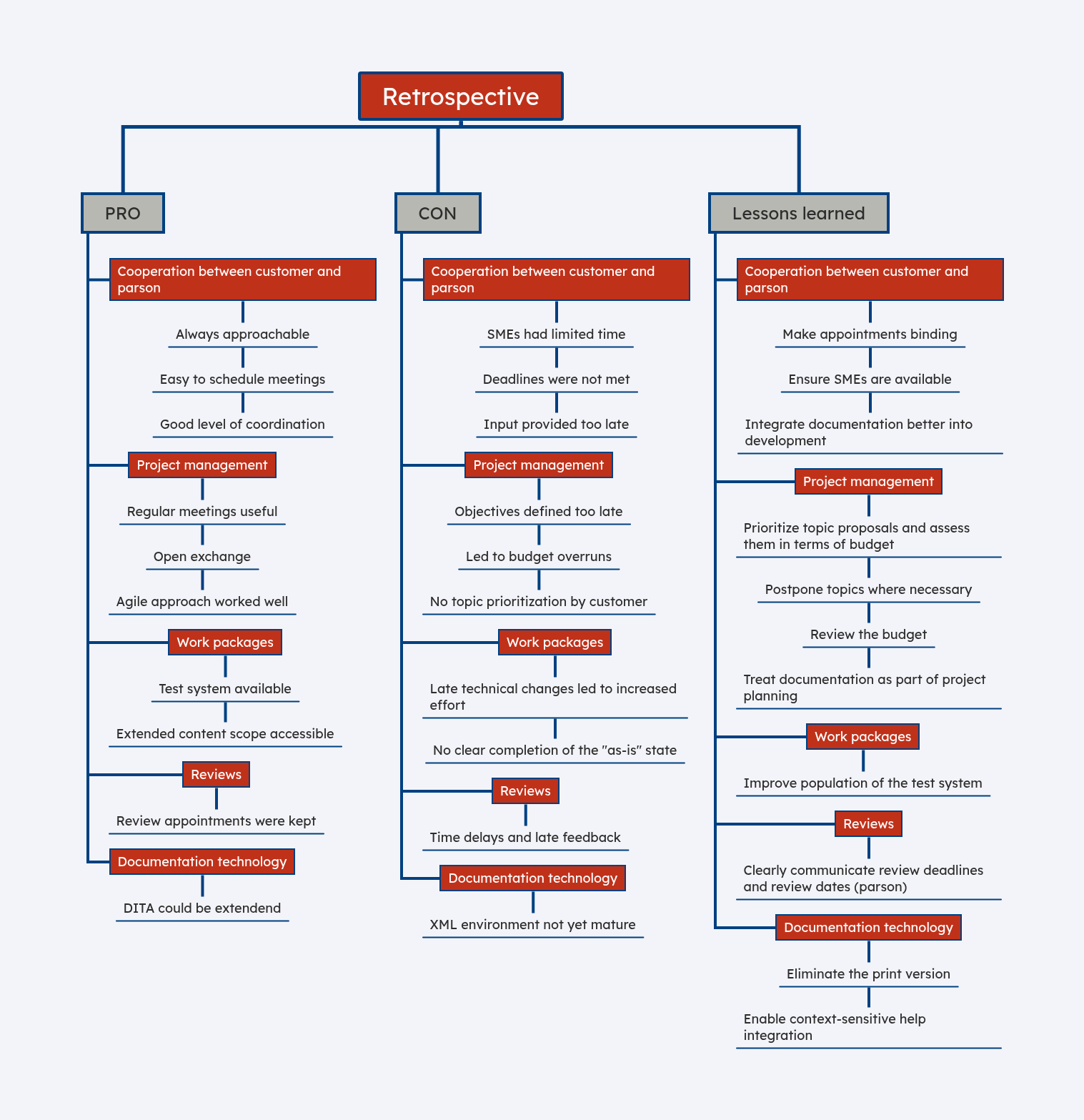
- Successes and challenges: Collaboration, project management, content, review process, documentation technologies
- Improvement measures: Derive concrete actions for future collaboration
- Closing: Reflect on the course of the retrospective
- Follow-up: Document and share the results
3. Moderation
An experienced moderator ensures that all participants have the opportunity to speak and that the discussion remains constructive.
4. Follow-up
The agreed measures are documented and tracked. This ensures that improvements are implemented and progress is reviewed.
5. Knowledge transfer
We present all retrospectives in our parson knowledge-sharing meeting. We focus on the three most important positive and negative aspects. This allows us to learn from one another and continuously improve our work with clients.
Conclusion
Retrospectives are a powerful tool offering numerous benefits to service providers and clients alike. They promote transparency, collaboration, and continuous improvement.
By reflecting on experiences together, both parties gain valuable insights that lead to more successful future projects.
A well-conducted retrospective is an indispensable component of every project at parson and significantly contributes to the long-term satisfaction and success of all stakeholders.
Do you have questions about project management at parson? Get in touch with us.