
Digital Product Passport – consulting and implementation for manufacturers
We support you in in implementing the DPP
The Digital Product Passport will become mandatory for many manufacturers over the coming years, raising practical implementation questions for companies:
What data is required? Where is it currently stored? How can it be provided in a structured, interoperable way?
parson AG supports companies in implementing the Digital Product Passport, from initial assessment to operational integration into systems and processes. We focus on connecting existing product data, content, and system landscapes to create a sustainable, scalable Digital Product Passport.
Typical practical questions include:
- How can we successfully implement a Digital Product Passport in our company?
- When will the Digital Product Passport become relevant for our products?
- What data is missing, and where is it created within the company?
- How can information from different systems, such as PLM, ERP, PIM, and content management systems, be combined in a meaningful way?
- How can variants, configurations, and individual product instances be correctly represented?
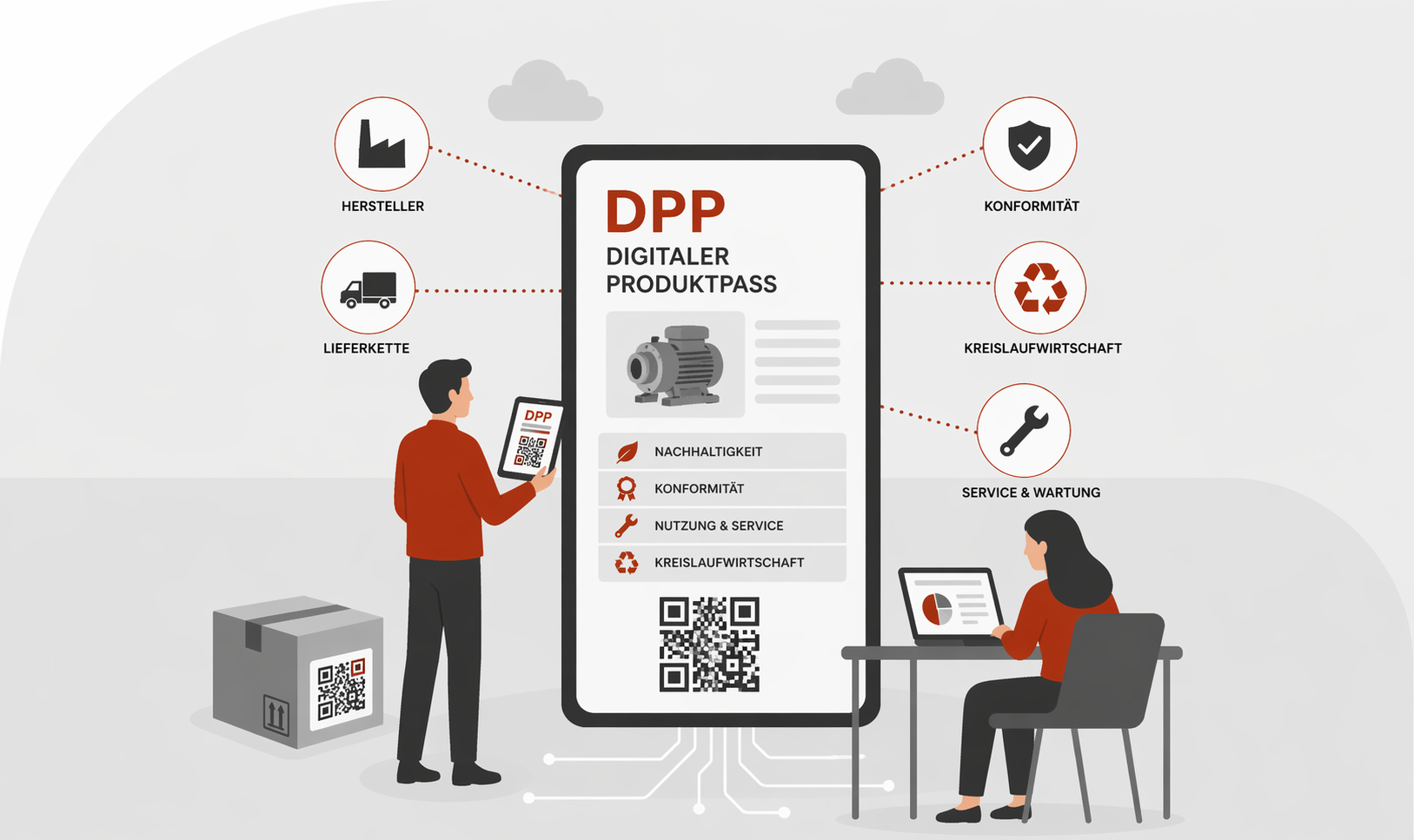
We support you in implementing the Digital Product Passport
For manufacturers, a Digital Product Passport means much more than just meeting regulatory requirements.
The real challenge lies in assembling product information from different systems for a specific product and providing it digitally and interoperably.
At the same time, this is where the greatest added value lies. A well-implemented Digital Product Passport fulfills EU requirements and strengthens a company’s brand presence. It also creates the foundation for new digital services.
Implementing the Product Passport creates:
- Consistent and reliable product information
- More efficient processes in development, service, and technical documentation
- Improved collaboration across the supply chain
- New digital services and data-driven business models
At the same time, existing documentation and compliance obligations can be fulfilled far more efficiently.
Many companies already possess much of the information required for a Digital Product Passport, but it is often distributed across different systems, departments, and formats.
Typical implementation challenges include:
- Fragmented data landscapes without an end-to-end structure
- Content stored as documents rather than structured data
- Missing links between product data, variants, and documentation
- Unclear responsibilities for data maintenance and quality
We ensure that distributed information becomes a consistent, usable data foundation. To do so, we structure your content, connect data from different systems, and establish the foundation for a consistent, machine-readable Digital Product Passport. How we work
Your contacts
for the Digital Product Passport




Introducing the Digital Product Passport in companies. This is how we work
We use a clearly structured, field-tested methodology to consult on the introduction of Digital Product Passports. We integrate business, organizational, and technical elements to transform initial concepts into sustainable enterprise solutions.
- Analysis and assessment. We analyze your product landscape with regard to DPP obligations and create an overview of the stakeholders involved in the process, including which roles and suppliers provide which data. Together, we define your company-specific target vision for the DPP, including compliance requirements, DPP granularity, and potential value-added services.
- Inventory of systems and data landscape. We determine which data should be included in the DPPs for your products. For each data class, we determine the leading system and the responsible stakeholders. Missing data is identified.
- Defining and implementing the target architecture for DPP data collection and the DPP system. We define integration scenarios and support the technical implementation of the Digital Product Passport, as well as its integration into existing systems, such as PLM, ERP, PIM, and component content management systems. Our focus is on the interaction between existing applications – from the data source to delivery within the Product Passport – rather than on a single new system. This creates an architecture that integrates with your existing IT landscape while remaining scalable and extensible.
- Establishing governance. We define processes, roles, and responsibilities for sustainable operation and continuous development. This includes clear data ownership responsibilities, defined maintenance processes, and mechanisms for quality assurance and versioning. This ensures that the Digital Product Passport is implemented and functions reliably in the long term. We also support your employees through change management processes.
- System integration and implementation. We help you implement the digital product passport – both technically and organizationally – within your existing IT infrastructure.
You can find more information about the Digital Product Passport in our FAQs.
Digital Product Passport seminar: Build knowledge and get started together
Would you like to establish a shared understanding of the Digital Product Passport and clarify what the upcoming requirements mean for your company? In our Digital Product Passport seminar, Roland Schmeling and Ulrike Parson explain the regulatory and technical fundamentals and show how companies can prepare for its introduction.
The seminar focuses on DPP-relevant data and data quality, systems and processes, as well as roles and responsibilities. Practical examples and discussions with participants help identify specific challenges and define possible next steps for your organization.
Frequently asked questions about the Digital Product Passport
Frequently asked questions about the Digital Product Passport
How do we start implementing a Digital Product Passport in practice?
A meaningful introduction to the Digital Product Passport begins with a clear assessment of your current situation, not technology.
Key questions include:
- Which product groups will be affected in the short or medium term?
- What role does your company play within the value chain?
- What requirements arise from this, beyond pure compliance?
Based on these questions, we typically conduct a structured assessment. What data already exists, where is it stored, and how well is it structured and connected?
parson supports this process by conducting a structured analysis of data, content, and system landscapes. This makes information flows and responsibilities transparent while deriving initial target scenarios.
What are the costs involved in implementing a Digital Product Passport?
The cost varies considerably and depends largely on the maturity of your data and system landscape.
Typical influencing factors include:
- The degree of data structuring and quality
- The number and heterogeneity of connected systems
- The complexity of variants and product configurations
- The share of unstructured content (e.g., PDF documentation)
Companies that already work with structured product data and modular documentation can implement much faster and more efficiently.
Many projects demonstrate that investments in structured technical documentation, modular content architectures, and semantic data models simplify the Digital Product Passport and unlock additional efficiency potential.
Is the Digital Product Passport relevant for smaller manufacturers?
Yes, the Digital Product Passport is relevant for enterprises of all sizes. Smaller manufacturers are also affected, especially if they:
- are part of international supply chains;
- supply components for regulated products; or
- need to provide data for the Product Passport as suppliers.
The challenge lies less in company size and more in the ability to provide relevant data in a structured, interoperable way. A pragmatic, step-by-step approach is essential.
How can the Digital Product Passport be integrated into existing systems?
A Digital Product Passport is typically created through the interaction of multiple systems, rather than through a single new tool.
Typical systems involved include:
- PLM/PDM for product structures and engineering data
- ERP for commercial and supply chain-related information
- PIM/MDM for product master data
- Component content management systems (CCMS) for technical documentation and service information
The central challenge is to connect these data sources consistently and make them usable across systems.
parson supports companies in developing integration architectures, data flow concepts, and mapping strategies, as well as selecting and implementing suitable content and component content management systems.
How long does it take to implement a Digital Product Passport?
It is usually introduced step by step.
Usable initial results, such as for selected product groups or use cases, can often be achieved within a few months. However, full implementation depends on factors such as data availability, system integration, and organizational maturity.
An iterative approach has proven effective: productive scenarios are implemented early and then systematically expanded.
How should we handle existing documents and unstructured content when introducing the DPP?
In many companies, a significant amount of information relevant to the Digital Product Passport exists in documents, such as PDFs, manuals, and technical descriptions.
For use in the Digital Product Passport, this content must be:
- broken down into smaller, reusable information units;
- enriched with metadata; and
- transformed into a structured, machine-readable format.
parson supports this transformation process by structuring content, modularizing it, and enriching it semantically. parson also helps introduce suitable component content management systems and content models.
What risks exist when implementing a Digital Product Passport?
The typical risks associated with implementing a Digital Product Passport lie in the organization and data foundation rather than in the technology itself. These include:
- Unclear responsibilities for data ownership
- Inconsistent or incomplete data
- Missing integration between systems
- Overly rigid or non-scalable architectures
A structured, step-by-step approach and a clear target architecture can significantly reduce these risks.
How can we ensure that the data in our Digital Product Passport remains usable in the long term?
A Digital Product Passport is not a one-time implementation but rather an ongoing organizational capability. The following are crucial:
- Consistent data models and unique identifiers
- Clear governance structures and responsibilities
- Processes for maintenance, versioning, and quality assurance
A sustainable information architecture and a robust integration strategy for DPP-relevant information, as well as established governance processes, ensure that your data remains usable in the long term. parson supports you in building an information and solution architecture for the DPP.
How should variants and individual product configurations be represented in the Digital Product Passport?
The DPP's level of detail, meaning whether it refers to a product model, a specific variant, or an individual instance, depends on the product category defined by EU regulations.
To represent specific product variants and individual product instances, the following are required:
- A consistent data model across all systems
- A clear representation of product structures and configuration logic
- Linking product data with relevant content (e.g., documentation, service information)
One of the greatest challenges is correctly assigning information to a specific product manifestation.
parson supports companies in this area by providing product modeling, ontology-based approaches, and the implementation of configuration-specific technical documentation. This ensures that the information precisely matches the corresponding product variant.
How are the digital twin and the asset administration shell (AAS) connected?
A digital twin is a digital representation of a product that contains all relevant data throughout its entire lifecycle, such as information about its properties, usage, or condition.
The AAS is a standardized data model that structures this information and makes it accessible.
In short: The digital twin describes the digital representation of a product, and the AAS provides a concrete structure for implementing this representation consistently and interoperably.
In the context of the Digital Product Passport, the AAS is often used as a technical foundation, though it is not mandatory. Other implementation approaches are also possible.