

How parson supported SEW-EURODRIVE with the analysis for a standardized information architecture
SEW-EURODRIVE is modernizing its technical communication in drive technology and drive automation by developing a future-proof information architecture. parson supported SEW-EURODRIVE with a comprehensive analysis of documentation processes and content structures, developing recommendations for next steps.
Initial situation: Challenges caused by product variants and legacy content structures
SEW-EURODRIVE, a leading provider of drive technology, is continuously modernizing its technical communication. The goal is to provide customers with context-specific, use case-tailored information via digital channels while ensuring compliance with the EU Machinery Regulation.
SEW-EURODRIVE’s products include electrical, mechanical, and electronic components that can be individually configured for customers across a wide range of industries. Technical documentation is delivered in various formats, including traditional operating instructions, supplementary product manuals for specific device type, online help for apps and software applications, and order-specific operating instructions for a configured device.
This combination of high product variability and multiple delivery formats results in complex requirements for technical communication. At the same time, historically evolved content structures make it difficult to automate content processes and scale reuse effectively.
A modern information architecture is therefore required to increase efficiency and enable systematic automation.
Historically grown content structures
The content structures within the component content management system (CCMS) have evolved in parallel with different delivery formats and vary across projects. These structures range from data collections covering documentation for multiple product variants to fine-grained information units (“information molecules”) for applications. Variant-defining metadata for controlling documentation variants are maintained as Schema ST4 taxonomies.
Differing content structures hinder process automation and increase the level of expertise and onboarding effort required within the technical writing team.
These different structures limit process automation, reduce transparency, and increase both the expertise required and the onboarding effort within the technical writing team.
Objective: A future-proof content landscape
SEW-EURODRIVE aims to establish a future-proof content landscape that supports various channels and output formats while enabling an end-to-end data chain throughout the organization.
This landscape is based on a standardized information architecture for variant-rich documentation and an optimized toolchain consisting of different information systems for content management, publishing, and content delivery. The defined objectives include:
- A standardized information architecture for variant-rich information products and different output formats within the Schema ST4 CCMS
- An end-to-end data chain for different types of information, such as variant-defining product characteristics
- Centralized delivery to output channels such as print, chatbot, and a content delivery portal via a content service application
Analysis project as the basis for transformation
As an initial step, SEW-EURODRIVE commissioned parson to analyze existing documentation processes, content structures, and data flows between the involved information systems. The goal was to identify optimization potential and to develop a roadmap for modernizing content structures and processes.
Project approach
To obtain a comprehensive view of the current information architecture and understand SEW-EURODRIVE’s requirements, parson conducted stakeholder interviews with representatives from technical writing, product management, product data management, translation management, and support. Additionally, we performed an in-depth analysis of the content structures in the CCMS.
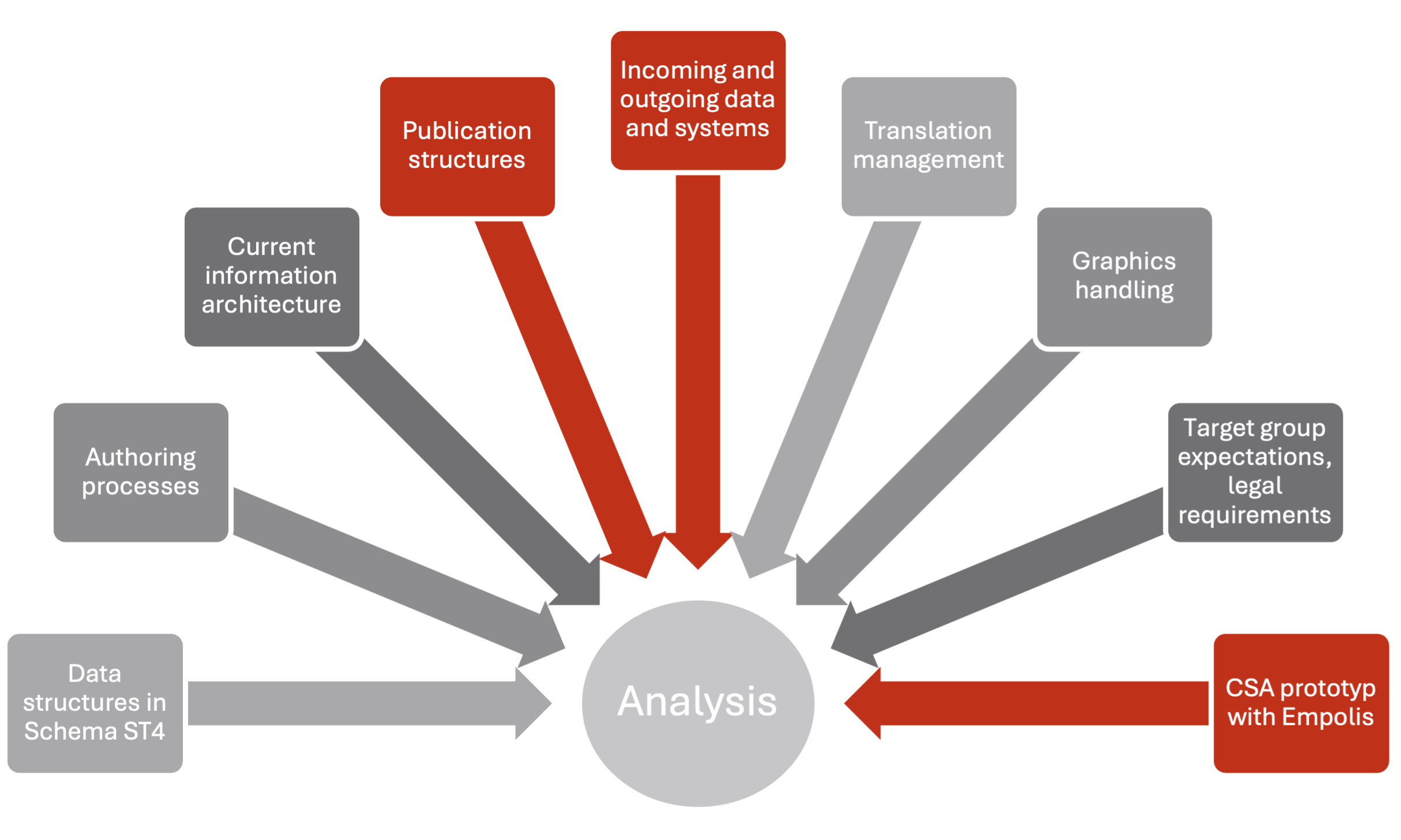
This analysis revealed the current structure of the content, how data flows operate, and how customers use the documentation. Particular focus was placed on the following:
- Authoring processes and content structures in Schema ST4
- Incoming and outgoing data flows
- Requirements resulting from variant-rich products and regulatory specifications
- Actual use of the information products by customers
Result: Current state assessment and recommendations for future project phases
parson’s analysis provides SEW-EURODRIVE with a clear understanding of the current state of its documentation landscape, including the strengths and optimization potential of its reuse strategies and processes. The analysis outlines a path toward a standardized, future-proof information architecture that can support digital and traditional delivery channels. Based on the project’s findings, parson recommended the following next steps:
- Developing a standardized content model that functions independently of target applications and delivery channels, complemented by a cross-functional metadata model linking content from documentation, product data, and other domains.
- Establishing a dedicated role responsible for maintaining and further developing the information architecture.
- Integrating authoritative data sources for product properties and product variants (“sources of truth”) with the CCMS to systematically transfer variant-defining product metadata into the documentation.
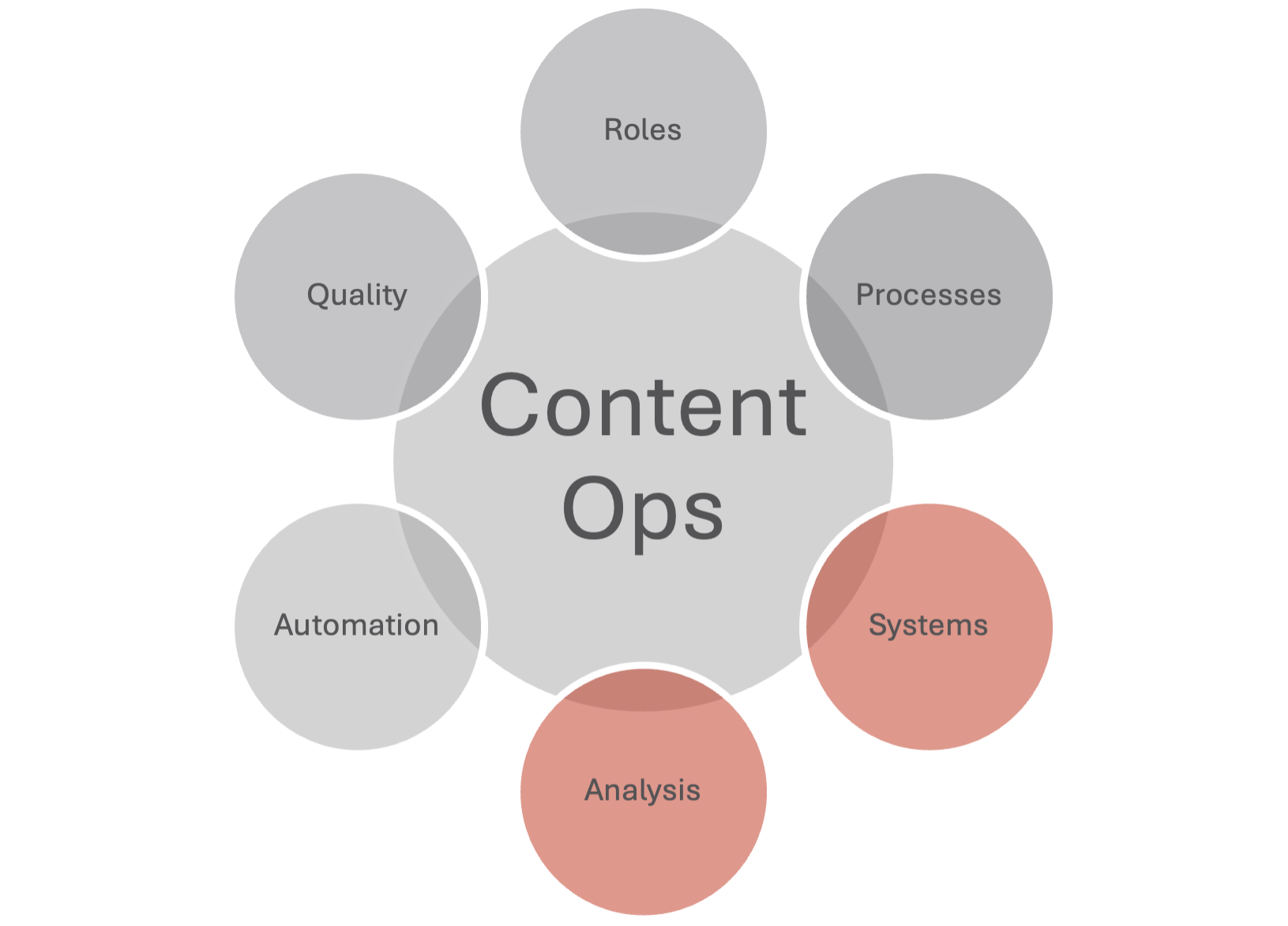
- Introducing content operations processes to ensure long-term quality, consistency, and scalability (recommended).
The following graphic illustrates the content operations model that emerged from the analysis as the target vision. It visualizes the key elements recommended by parson to SEW-EURODRIVE.
Customer quote
In collaboration with the parson team, we developed a clear strategy to modernize and align our technical documentation with the requirements of variant-rich products. The end-to-end analysis, which covered everything from requirements to user feedback, was particularly valuable because it provided insight into our data flows and authoring structures. This allowed us to establish a solid foundation for further developing our information architecture – one that is future-proof, efficient, and compliant.
Next steps
With parson’s support, SEW-EURODRIVE will develop and validate the new information architecture in a Schema ST4 prototype. This will establish the foundation for a sustainable, modular, and reusable documentation landscape optimized for all channels.
Do you need help developing a modern information architecture? Learn more!
About SEW-EURODRIVE GmbH & Co KG
From design and planning to machine automation and modular factories. SEW‑EURODRIVE offers innovative solutions, with products and services provided from a single source. We have a worldwide presence and are close to our customers.