
How parson supported Hamburg-based EyeC GmbH in transitioning technical documentation to DITA-XML
At EyeC GmbH, technical documentation had long been created in a traditional way. Manuals were produced in InDesign using a layout-based approach. While this approach initially worked well, the growing diversity of products increasingly posed an increasing challenge, especially when handling variants and reusing content.
Together with parson, EyeC GmbH therefore transitioned to a DITA-based documentation approach. The goal was to create structured, modular technical documentation that could be efficiently maintained and expanded in the long term.
During the transition to DITA-XML, parson and EyeC GmbH developed a new information architecture, migrated existing content into a topic-based structure, and implemented an end-to-end publishing workflow for both WebHelp and PDF outputs.
Initial situation: Layout-based documentation in InDesign
At EyeC GmbH, technical documentation was primarily created in InDesign with a strong focus on layout. This meant that the content was tightly bound to the individual documents and difficult to reuse. As product complexity increased, this became a major issue. Content had to be maintained multiple times, variants were time-consuming to manage, and changes often required manual rework.
Goal: Introduction of modular documentation with DITA
EyeC GmbH aimed to redesign its approach to documentation by introducing a modern, modular system based on DITA-XML. The goal was also to make technical documentation future-proof. Key objectives included:
- Clearly separating content and presentation
- Introducing topic-based documentation
- Building modular, reusable content
- Improving variant management
- Enabling single-source publishing for multiple output formats
In addition to PDF documentation, modern WebHelp output based on DITA was to be implemented.
Another important objective was to expand internal expertise in working with DITA-XML and tools such as the Oxygen XML Editor.
Approach
Goals and framework conditions. At the start of the project, parson and EyeC GmbH analyzed the existing documentation landscape and defined the project's goals and framework conditions. A key focus was to identify how existing documentation could be transformed into structured content. This formed the basis for a modern, DITA-based information architecture.
Documentation analysis. In workshops with the technical writing team, parson experts analyzed existing content. The focus was on document structure, content modularization, and requirements for future output formats in a DITA environment. The result was a clear and robust DITA structure to serve as the foundation for future steps.
Knowledge transfer. A central part of the project was knowledge transfer. Going forward, the technical writing team at EyeC GmbH will be able to work independently with DITA-XML and the new modular documentation setup.
Solution: modular documentation based on DITA-XML, published with the Oxygen XML Editor
Implementation was based on the Oxygen XML Editor, a well-established tool for DITA-XML and structured documentation. The project included the following:
- Building a clear DITA folder structure
- Defining standardized topic types for different content types, such as tasks
- Setting up a publishing workflow
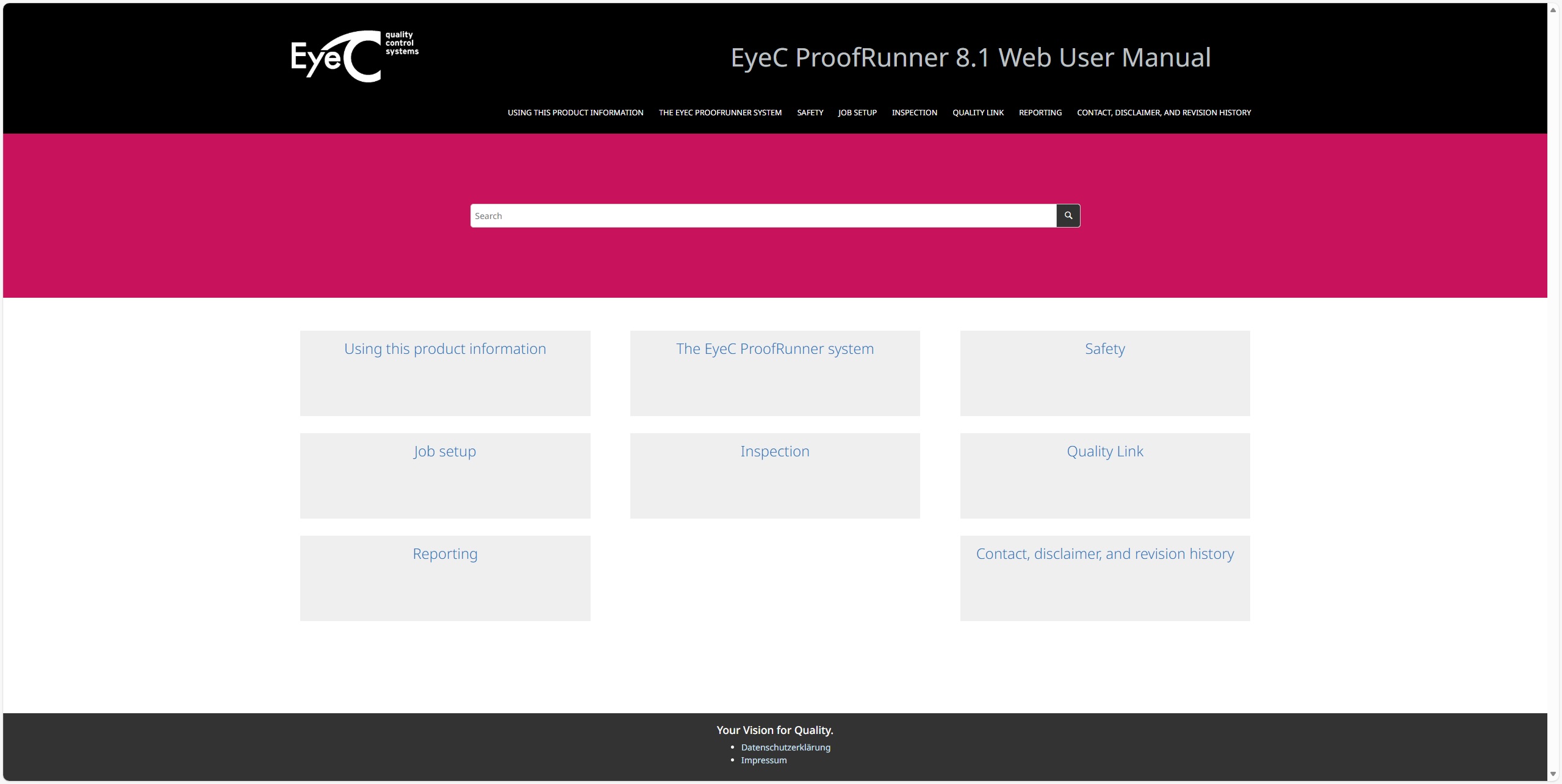
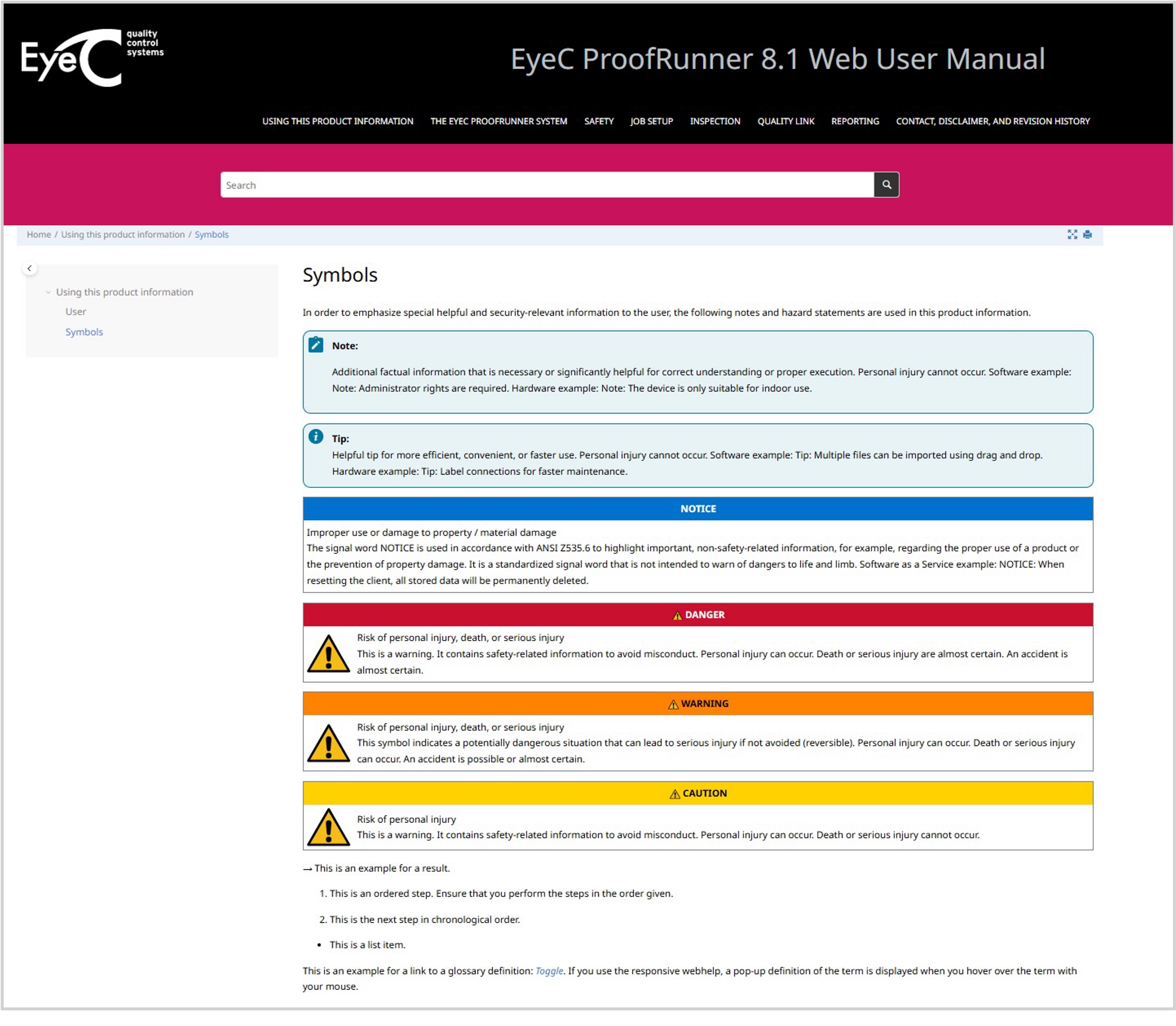
- Creating WebHelp for HTML output on the website
- Developing a template for PDF publishing
With these steps, EyeC GmbH established the foundation for scalable, future-proof, structured documentation.
Result: scalable DITA documentation and modern WebHelp output
The technical writing team at EyeC GmbH now works with a modern DITA information architecture and clearly structured content. Specifically, they now have:
- A defined DITA structure for future content
- A modern WebHelp output format
- Optimized PDF outputs from a single source (single-source publishing)
- Internal expertise in DITA-XML and structured documentation
Technical writers at EyeC GmbH now create and maintain content directly in the Oxygen XML Editor.
Outlook
Following the successful implementation of DITA-based documentation, EyeC GmbH plans to take further steps to modernize its documentation landscape. One potential next step is creating developer documentation in the Oxygen XML Editor instead of LibreOffice. In the future, EyeC GmbH plans to evaluate the effectiveness of integrating the following approaches:
- Markdown-based developer documentation
- HTML publishing
- Integration into structured documentation
These changes will allow EyeC GmbH to unify its documentation strategy and allow it to continue modernizing its technical documentation.
Working with parson, we successfully transitioned our technical documentation to DITA-XML. The combination of methodological consulting and hands-on implementation expertise was particularly valuable to us. This enabled us to build a modular documentation structure that we can now continue developing independently.
Find your new DITA solution now!
About EyeC GmbH
EyeC GmbH offers fast, precise, and user-friendly systems for artwork and print inspection. EyeC GmbH is the only provider on the market that guarantees product quality throughout the entire manufacturing process.